
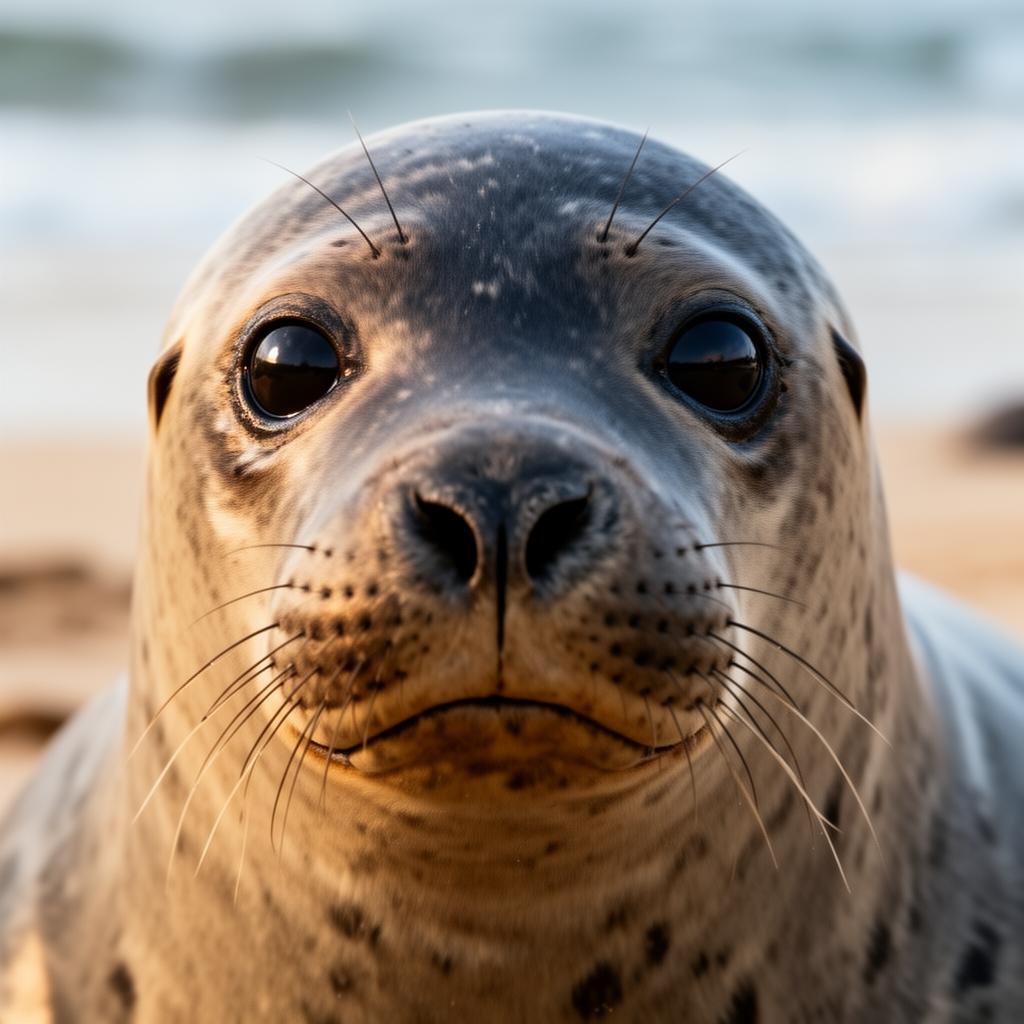
Hawaiian Monk Seal.
Endemic to Hawaiʻi and one of the most endangered seals on Earth, with fewer than 1,500 wild individuals remaining.
This rare seal is endemic to the Hawaiian Islands and is found nowhere else in the world. Its primary natural habitat lies in the Northwestern Hawaiian Islands, the most remote part of the Hawaiian chain. These mostly uninhabited islands and atolls to the northwest of Kauaʻi comprise Papahānaumokuākea Marine National Monument. Monk seals are also sighted around the main Hawaiian Islands.
The Hawaiian monk seal is a critically endangered species, with the most recent NOAA population census indicating about 1,500 seals across the Hawaiian archipelago. They are protected by both Federal and State laws.
Hawaiian monk seals naturally spend about a third of their time resting and sleeping on shore. They are not lazy, but conserve energy between their hunting and foraging trips. They feed on reef fish, octopus, and lobster. When hunting on the reef, they may stay underwater for more than 15 to 20 minutes. Monk seals have been known to dive to about 1,650 feet (500 m). Large tiger and Galapagos sharks are their main natural predators.
Females give birth for the first time at five to nine years of age. Seal pups are usually born in the spring. They nurse for 5 to 6 weeks and can quadruple their birth weight of 35 pounds. After weaning, pups live off their fat while they learn to forage for themselves.
The Hawaiian monk seal at the Waikīkī Aquarium is here under special permit from the National Marine Fisheries Service. The seals are part of a non-intrusive biological research program that allows us to learn more about their biology and life history so that we can work to increase their numbers in the wild.