
Stormwater at the Aquarium.
Sitting at the edge of the ocean means every raindrop that falls on our property could end up on the reef. Here is how we keep it clean.
From parking lot to reef
Untreated stormwater is one of the biggest threats to nearshore reefs in Hawaiʻi. Rain washes oil, sediment, fertilizer and trash off pavement and into storm drains, where most of it discharges directly into the sea — often only steps away from living coral.
The Waikīkī Aquarium sits between Kapiʻolani Park and a fringing reef. Every drop of rain that falls on our roofs, walkways and parking lot has the potential to reach that reef in minutes.
Slow it, spread it, sink it
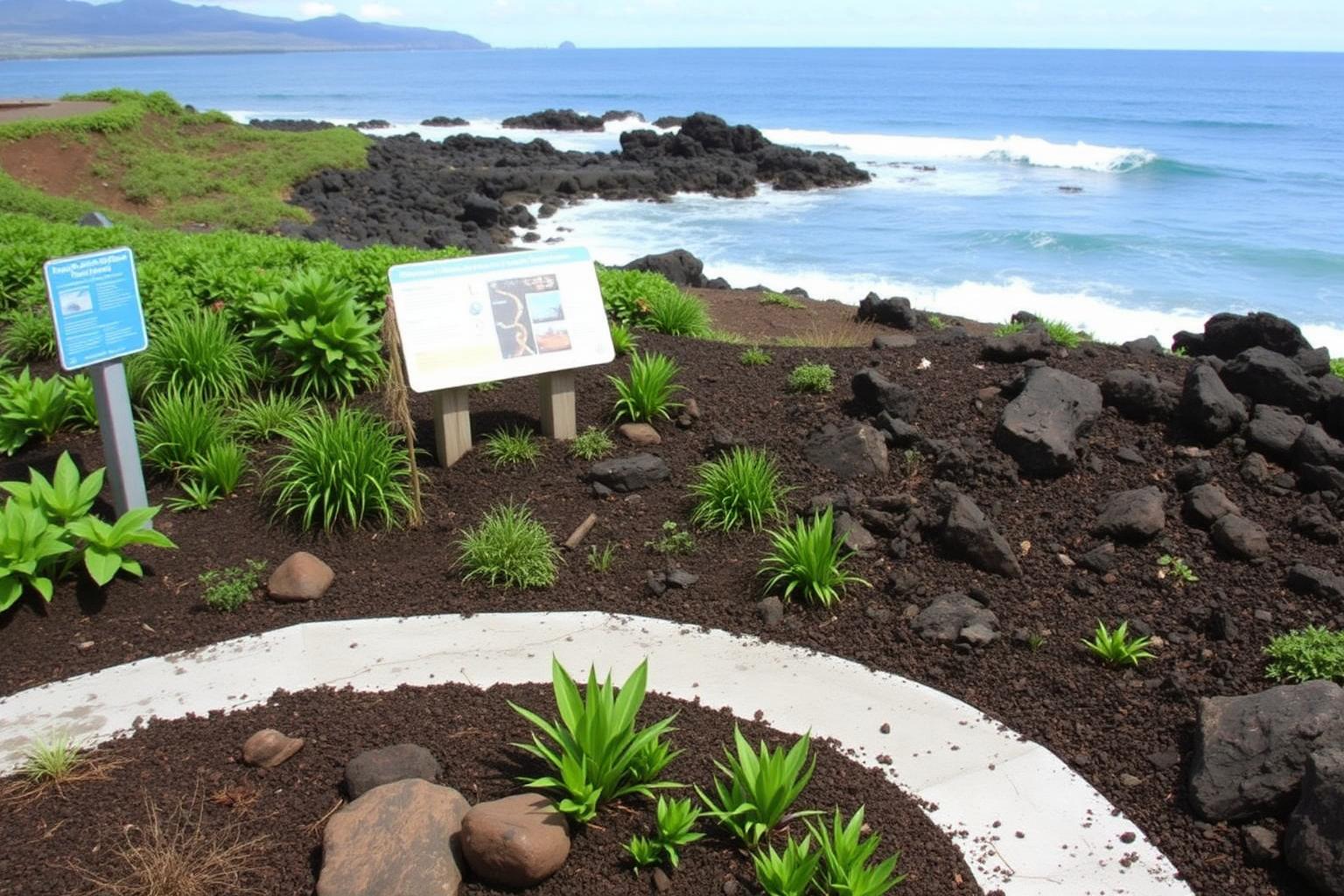
We use a combination of bioswales, rain gardens and permeable surfaces to slow stormwater, spread it across vegetated areas, and let it sink into the soil rather than racing for the nearest drain.
Native and Polynesian-introduced plants do the filtering. Their root systems trap sediment and pull nutrients from the water before it ever reaches the ocean.
Keep it on land
At home: pick up after pets, never wash your car in the street, sweep clippings off the sidewalk, and use fertilizer sparingly. Anything on a hard surface is one rain away from the reef.
Around Hawaiʻi: never dump anything down a storm drain. They flow straight to the ocean — only rain belongs in a drain.