
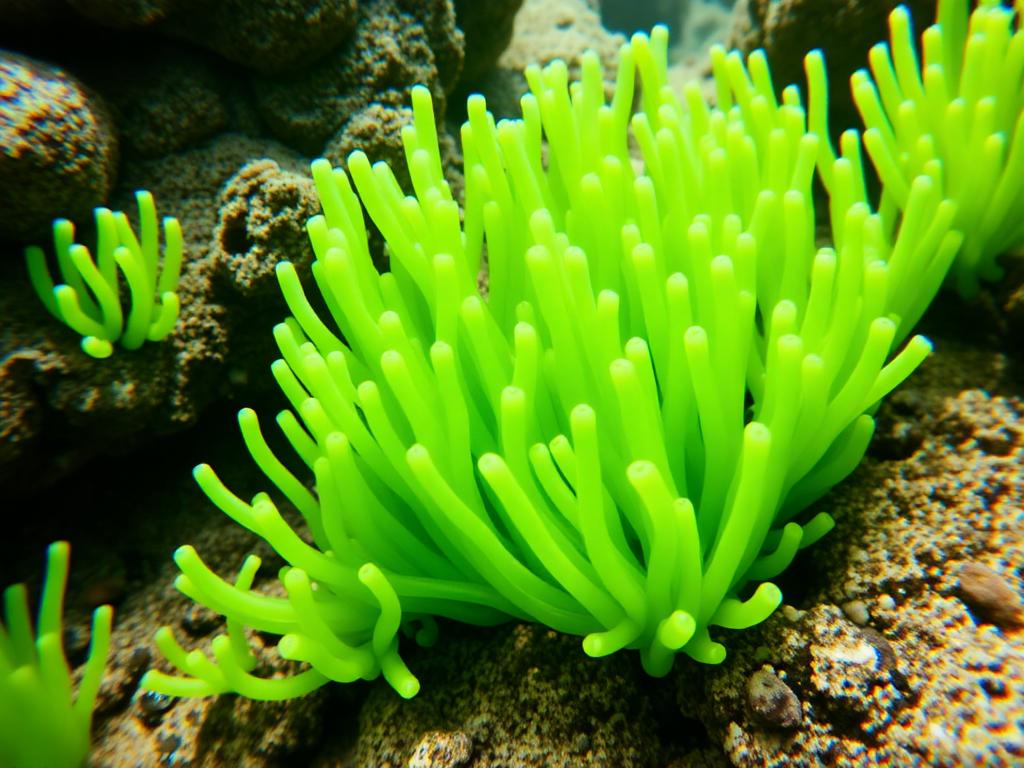
Limu Wāwaeʻiole.
Soft, finger-like green algae whose name means "rat's foot." Traditionally eaten fresh or salted.
Limu wāwaeʻiole — literally "rat's foot" — is a soft, branching green algae that grows in shallow tidepools and on protected reef flats throughout the Hawaiian Islands.
It was a staple of the traditional Hawaiian diet, eaten fresh or salted and often pounded with kukui nut and chili pepper as a relish (ʻinamona) for fish and poi.
Today it remains one of the most commonly gathered limu, but stocks have declined in some areas due to pollution and overharvesting. Traditional gathering practices — taking only what you need and leaving the holdfast — are essential to its survival.
More from Seaweeds (Limu).
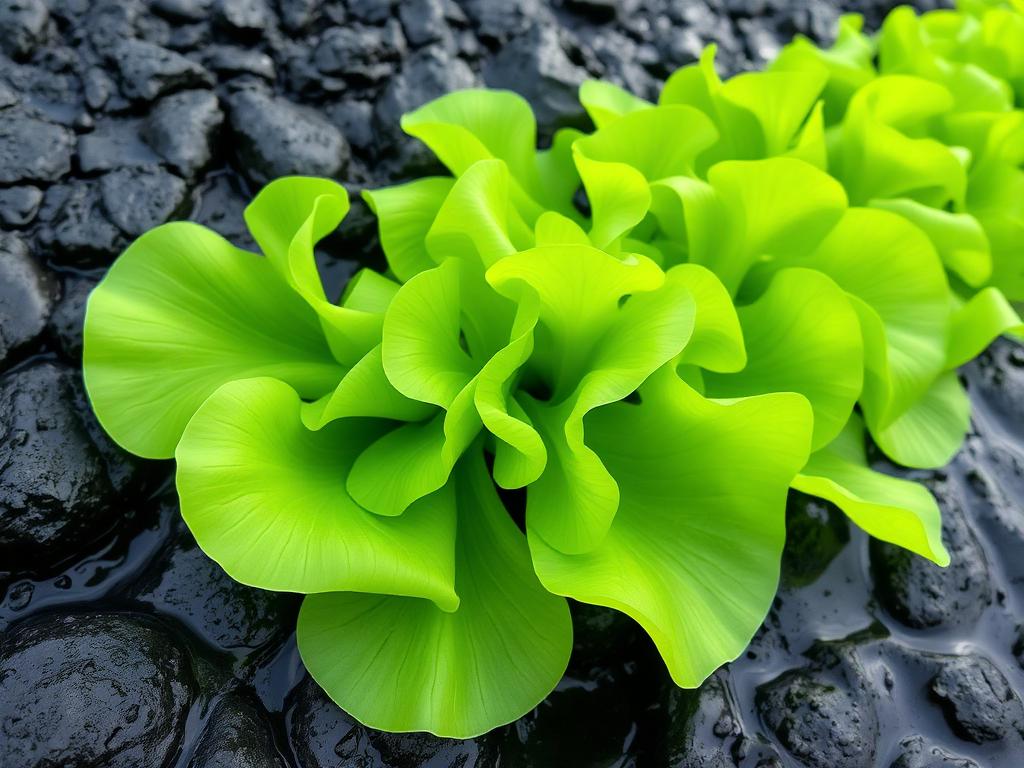
Limu Pālahalaha
Bright green "sea lettuce" with broad, translucent sheets that drape the intertidal.
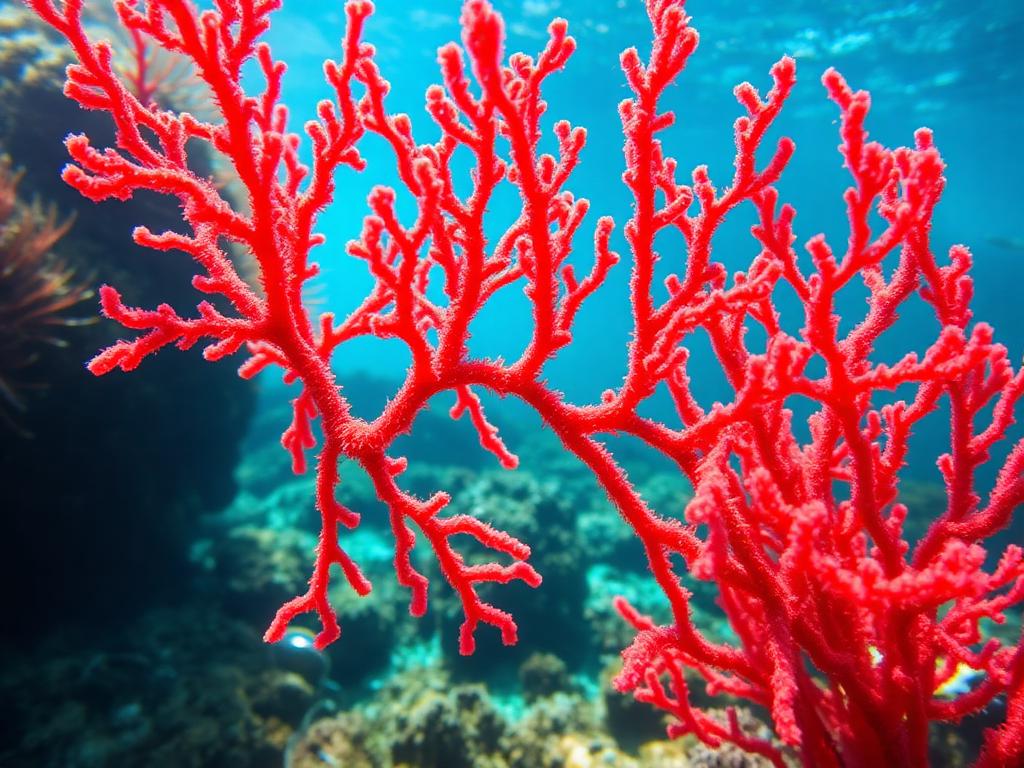
Limu Manauea
A reddish-brown branching limu and a star ingredient of traditional ʻahi poke.
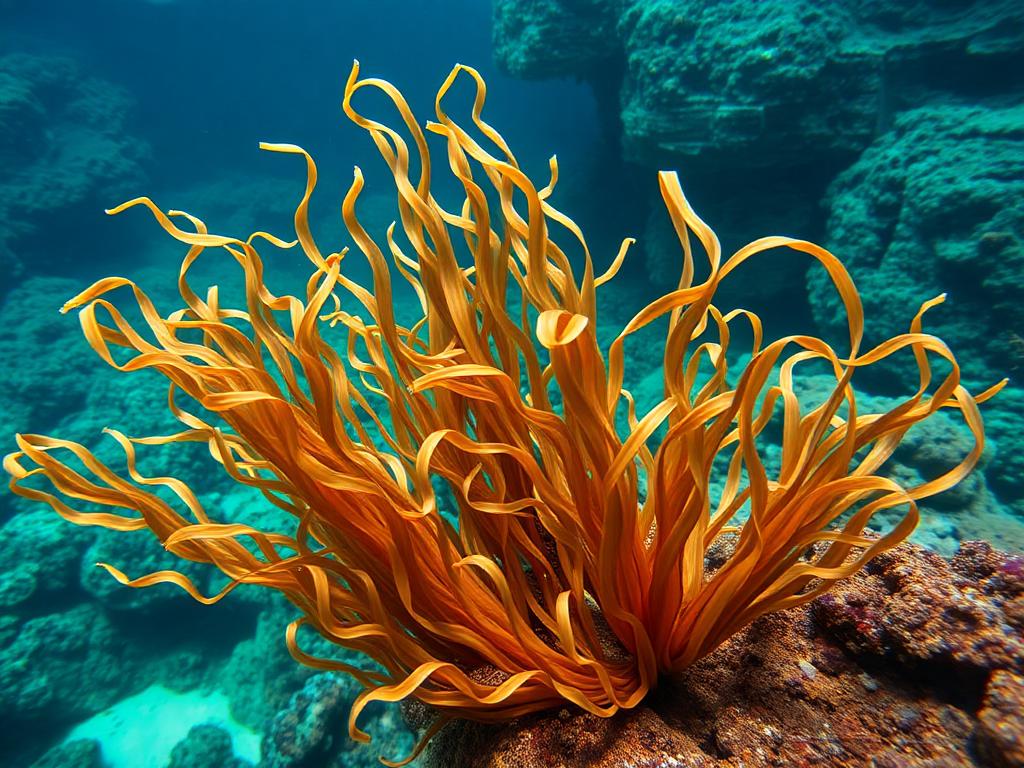
Limu Līpoa
Aromatic brown algae with a strong, almost peppery flavor.
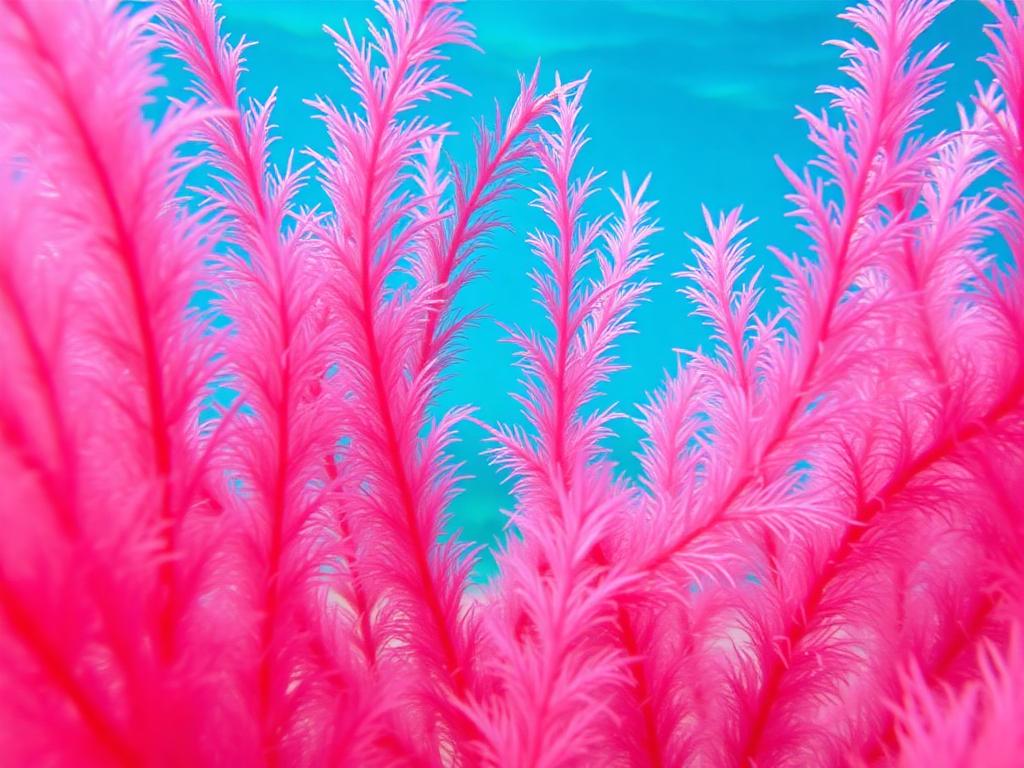
Limu Kohu
Reddish-pink, soft and feathery — perhaps the most highly prized Hawaiian limu.