
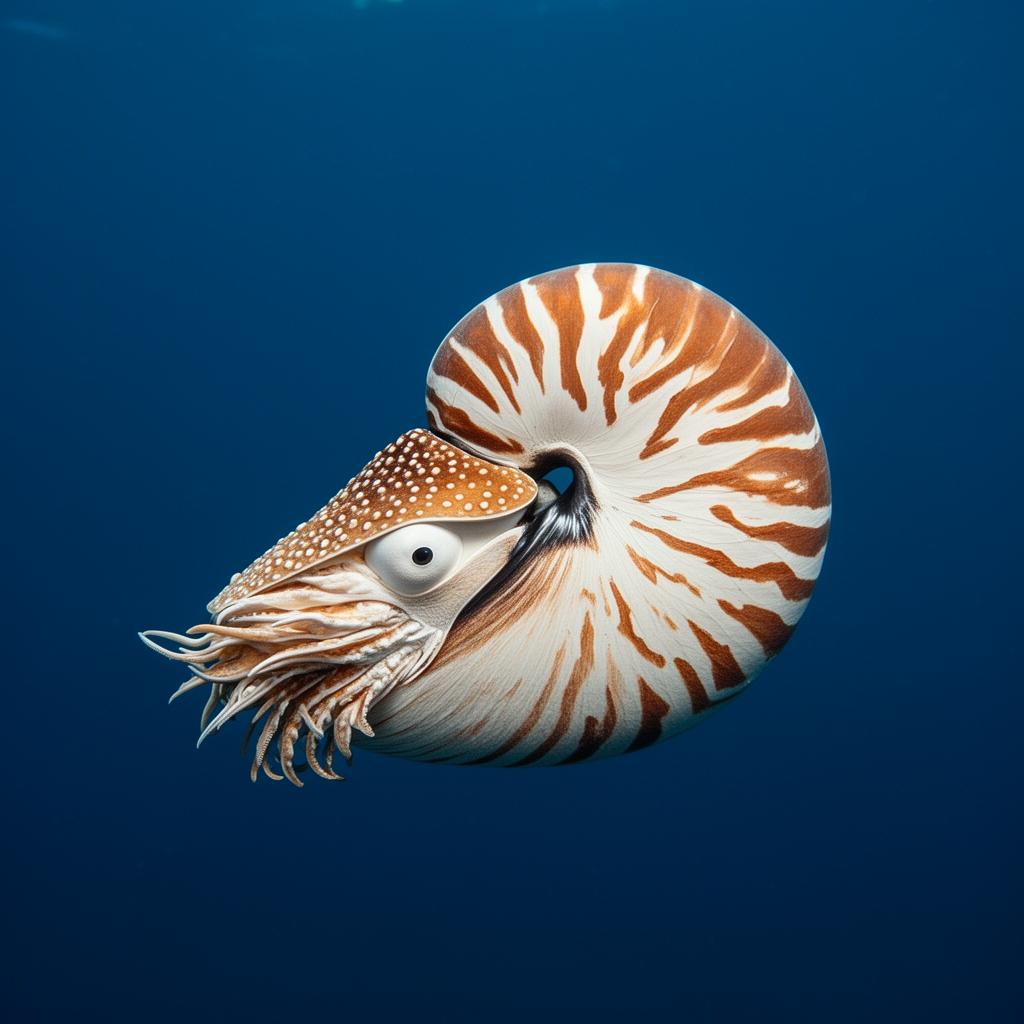
Chambered Nautilus.
A living fossil whose ancestors swam alongside dinosaurs, the nautilus drifts through deep reefs in a perfect spiral shell.
The chambered nautilus belongs to an ancient lineage of cephalopods that has remained largely unchanged for over 500 million years. Its iconic spiral shell is divided into gas-filled chambers that the animal uses for buoyancy, adjusting the gas pressure to rise and sink through the water column.
Unlike its octopus and squid cousins, the nautilus has up to 90 simple tentacles without suckers, used to grasp shrimp, fish scraps and molting crustaceans. It hunts mostly by smell, drifting along deep reef walls between 300 and 1,500 feet down.
Nautiluses migrate vertically each night, rising into shallower water to feed and descending again before dawn. They are slow-growing, long-lived animals that can survive 15 to 20 years, an extreme lifespan for a cephalopod.
Demand for their beautiful shells has put nautiluses under serious pressure, and they are now protected under CITES Appendix II. The Waikīkī Aquarium has bred chambered nautilus in captivity, a remarkable achievement that supports research into their biology and conservation.
More species in this group.
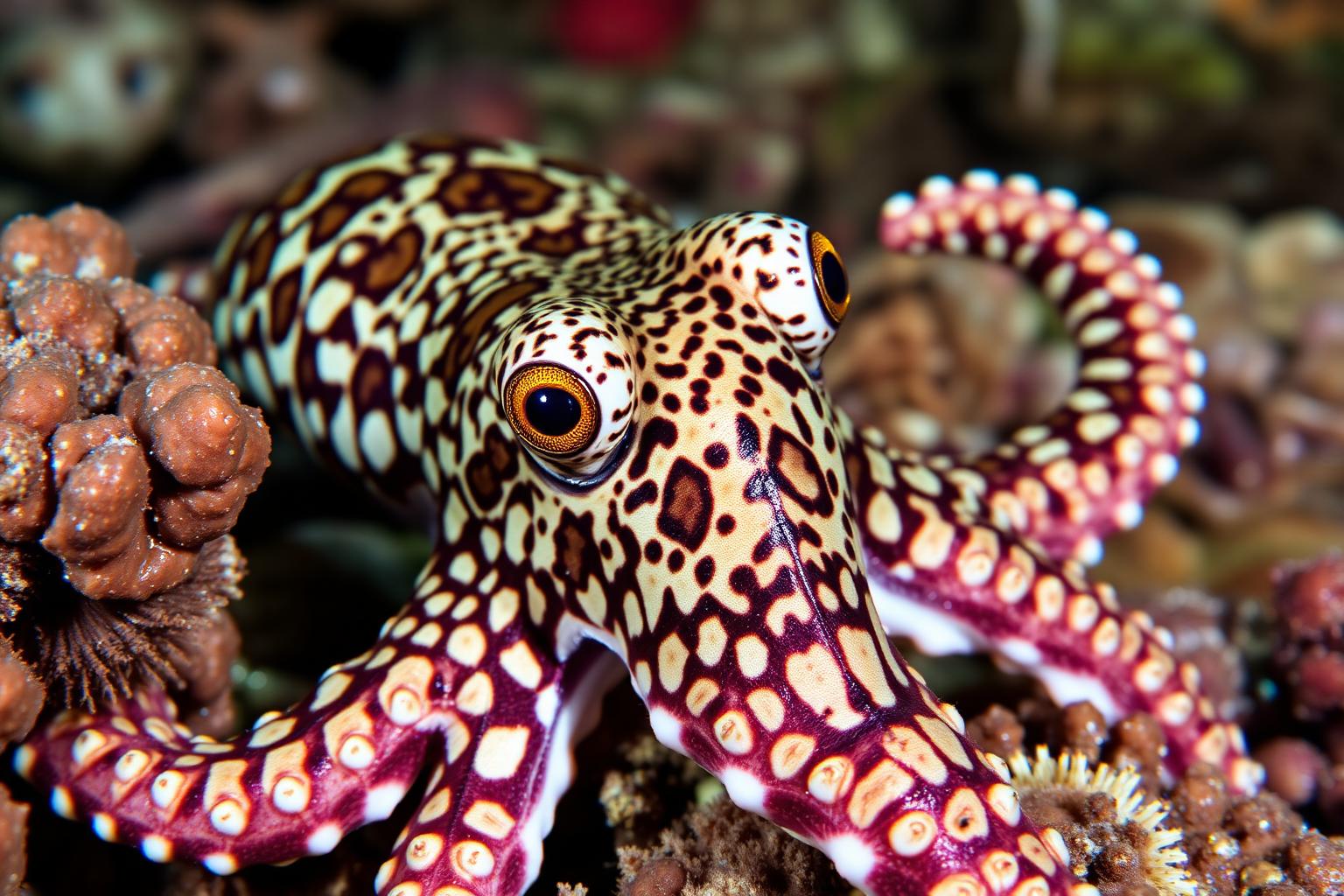
Day Octopus
A daytime hunter and master shapeshifter, Hawaiʻi's most commonly seen octopus can change color and texture in under a second.
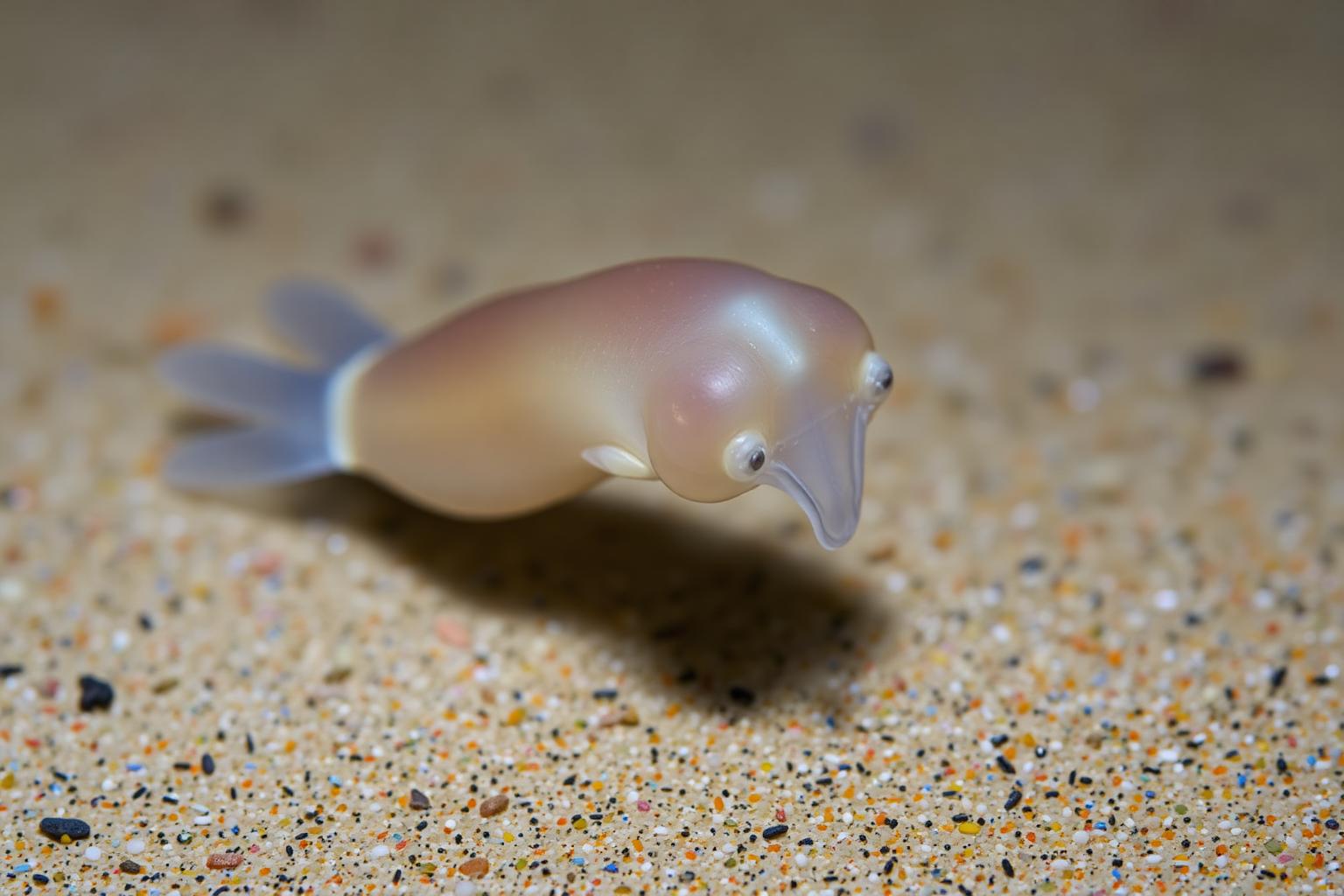
Hawaiian Bobtail Squid
A thumb-sized squid that hides in plain sight using bioluminescent bacteria to erase its own shadow under the moon.
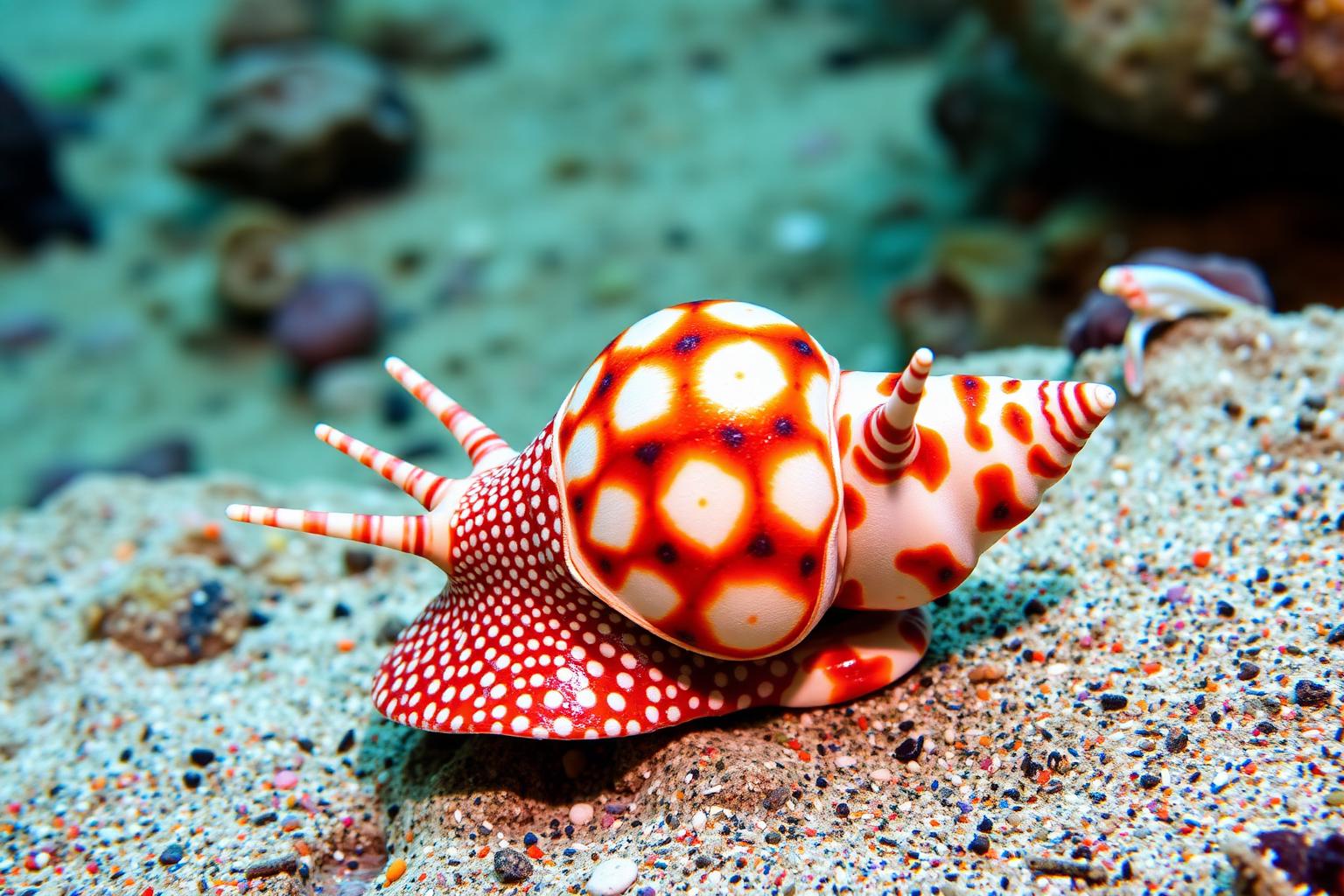
Textile Cone Snail
A beautiful but dangerous predator that fires a venomous harpoon to paralyze fish — and whose toxins inspire modern medicine.
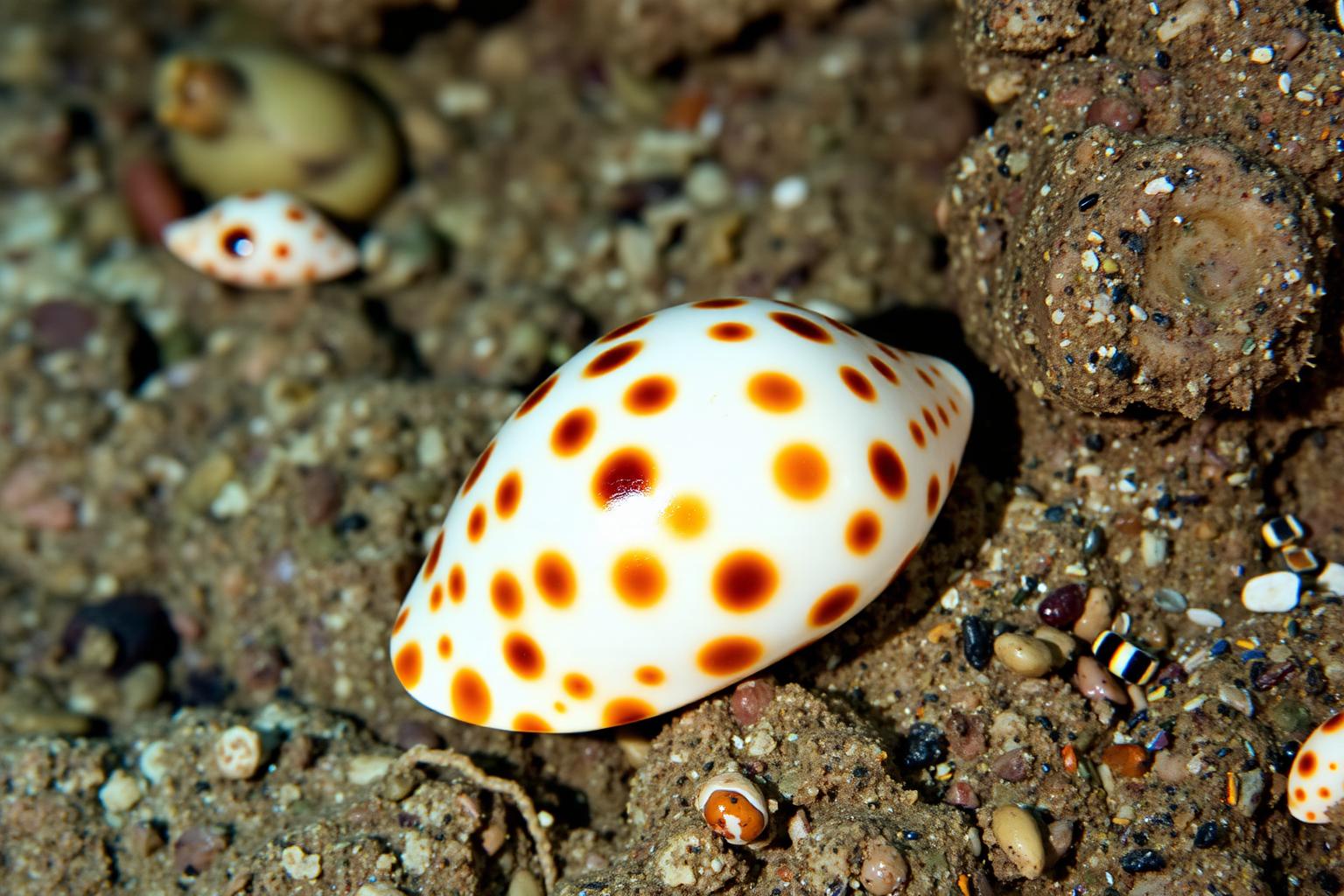
Tiger Cowrie
Treasured for its glossy spotted shell, the tiger cowrie polishes its own surface with a fleshy mantle that wraps the shell completely.