
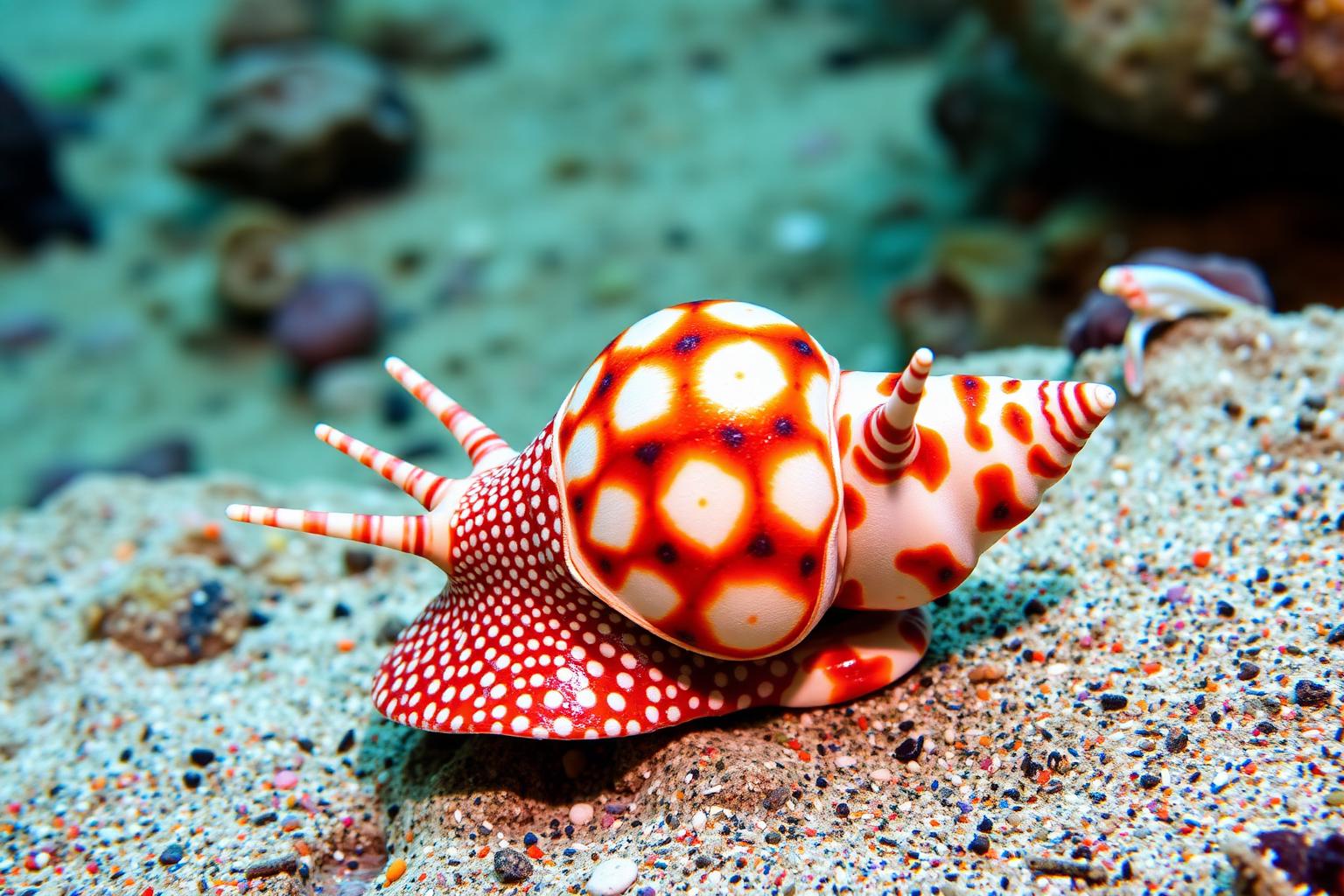
Textile Cone Snail.
A beautiful but dangerous predator that fires a venomous harpoon to paralyze fish — and whose toxins inspire modern medicine.
Cone snails are slow-moving predatory sea snails with stunningly patterned shells. The textile cone, named for its tent-like markings that resemble woven fabric, is one of the most common species on Hawaiian reefs and one of the most dangerous.
Despite its slow pace, the cone snail is a formidable hunter. It tracks prey by smell, then extends a long flexible proboscis tipped with a hollow, harpoon-like tooth. The harpoon strikes in milliseconds, injecting a complex venom that instantly paralyzes the victim.
Each cone snail produces dozens of unique toxins called conotoxins, many of which target nerve cells with surgical precision. Several have been developed into pharmaceuticals, including a powerful non-opioid painkiller derived from a related species.
Cone snails should never be handled. Stings from the textile cone have caused human deaths. Their beautiful shells have made them a favorite of collectors, but living animals on the reef are best admired from a respectful distance.
More species in this group.
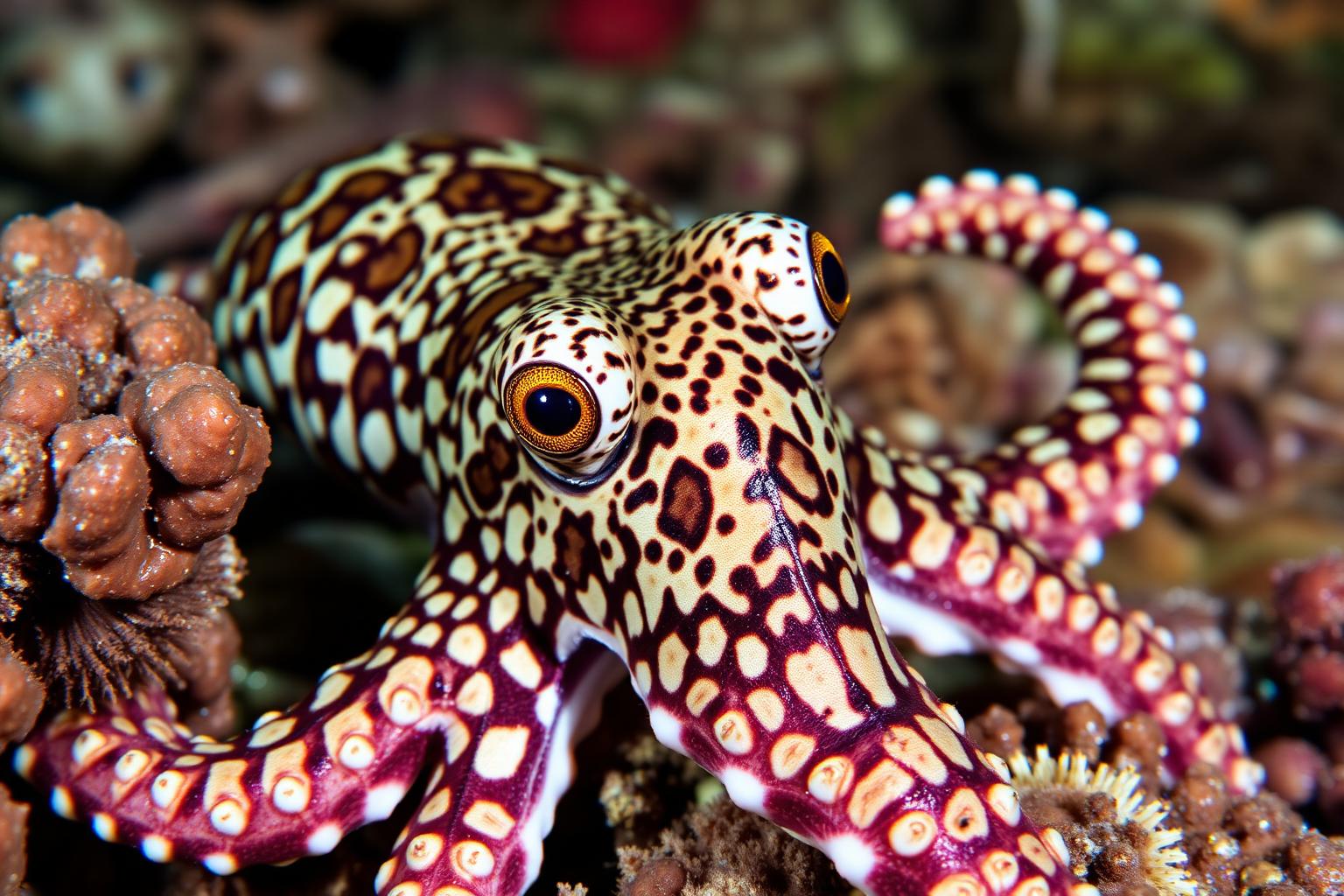
Day Octopus
A daytime hunter and master shapeshifter, Hawaiʻi's most commonly seen octopus can change color and texture in under a second.
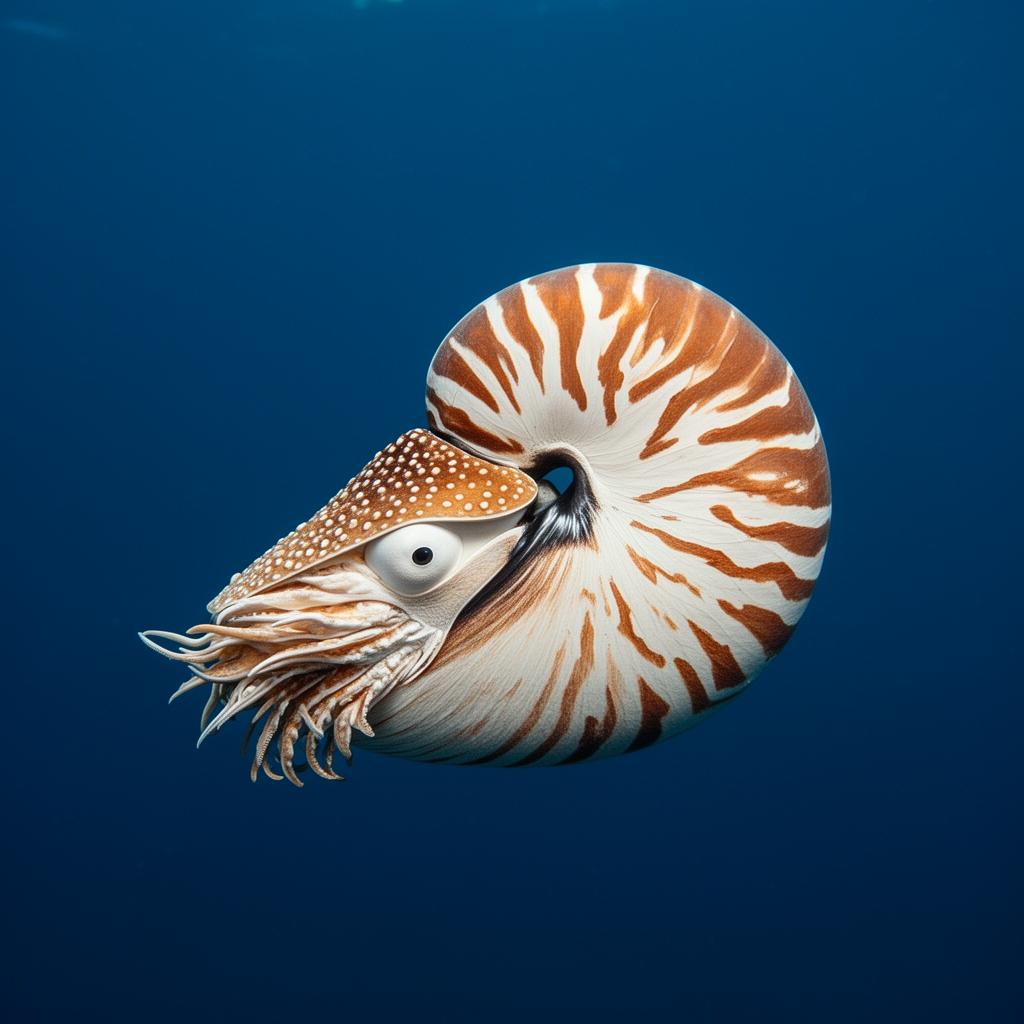
Chambered Nautilus
A living fossil whose ancestors swam alongside dinosaurs, the nautilus drifts through deep reefs in a perfect spiral shell.
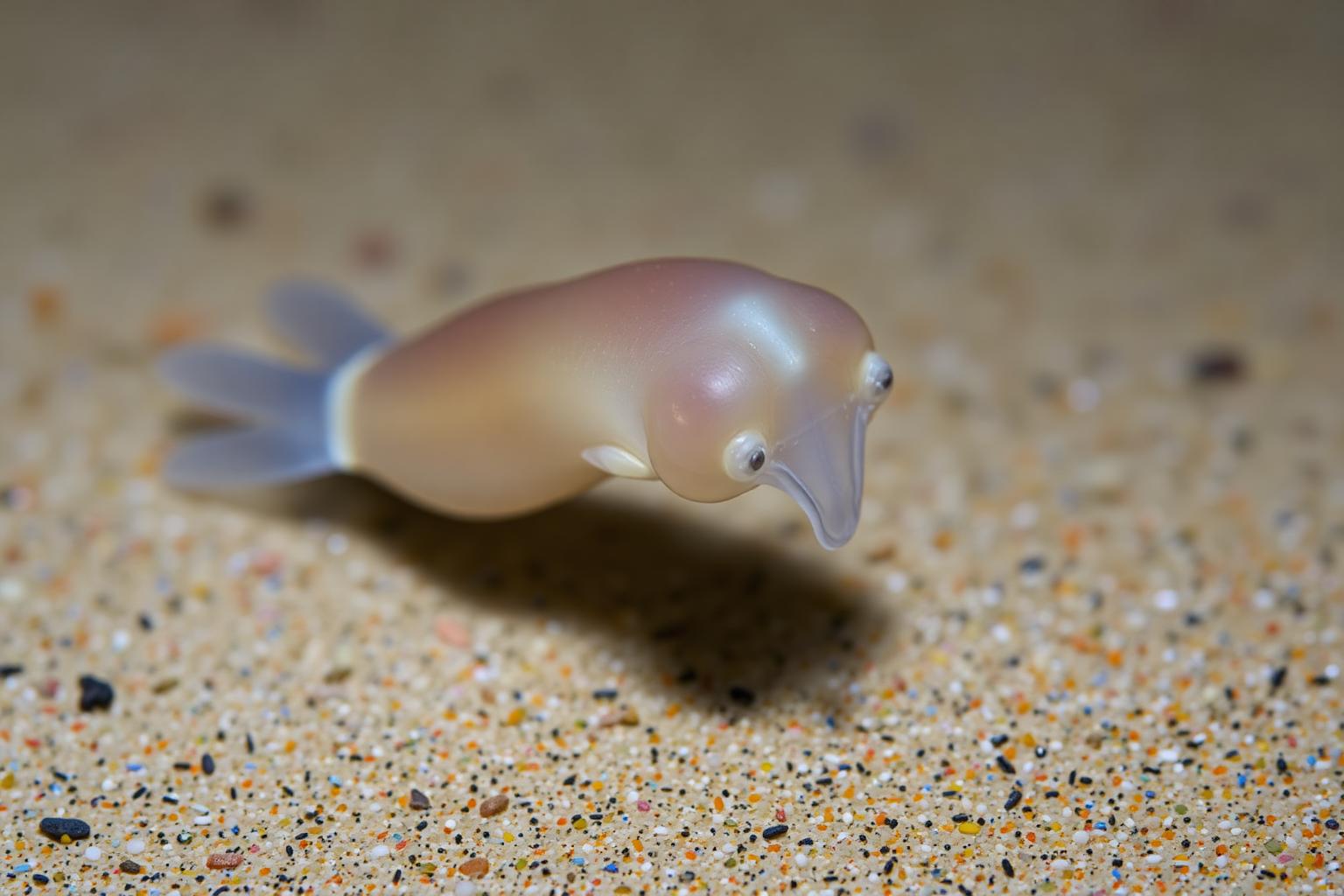
Hawaiian Bobtail Squid
A thumb-sized squid that hides in plain sight using bioluminescent bacteria to erase its own shadow under the moon.
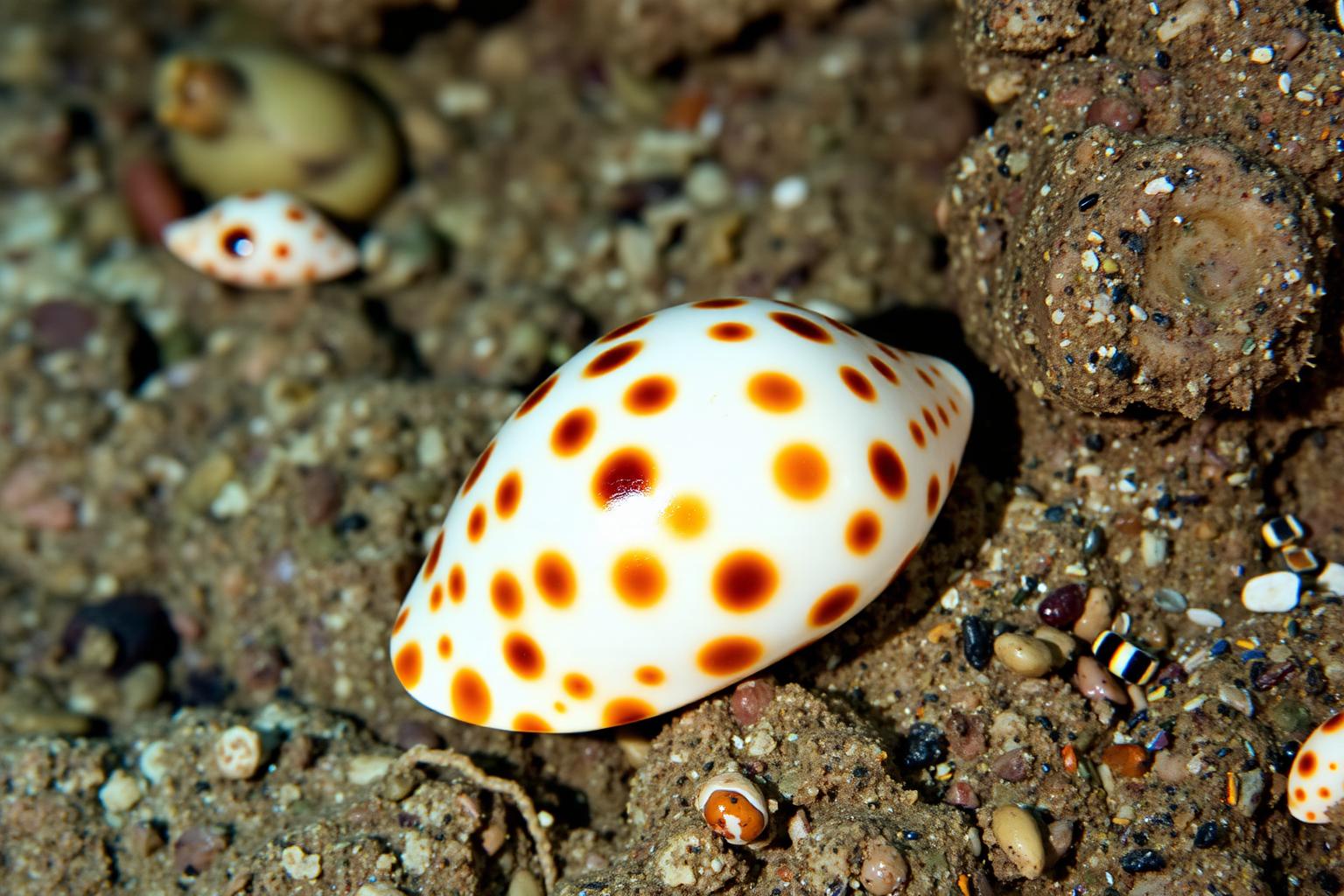
Tiger Cowrie
Treasured for its glossy spotted shell, the tiger cowrie polishes its own surface with a fleshy mantle that wraps the shell completely.