
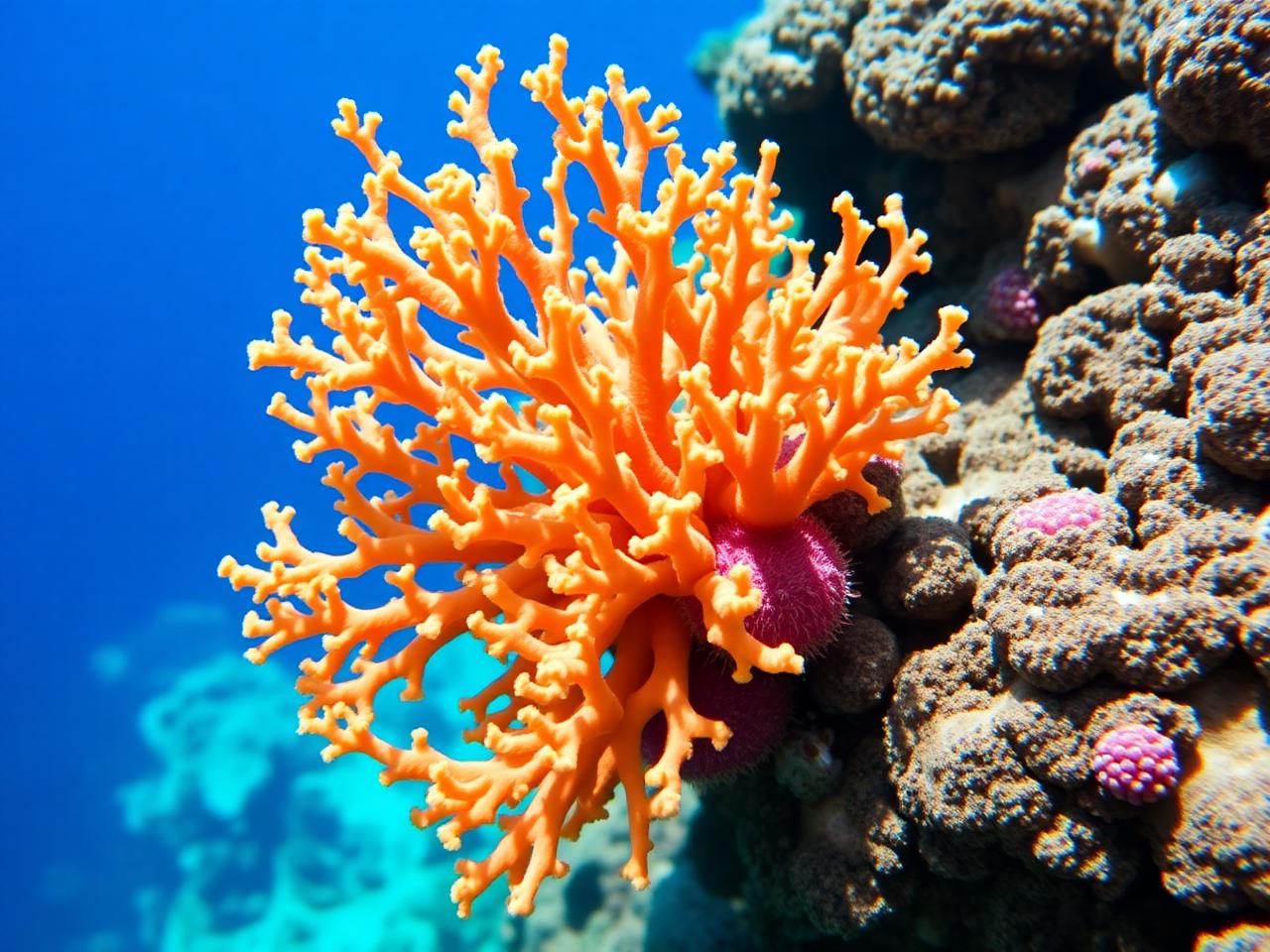
Cauliflower Coral.
One of the most common reef-builders in Hawaiʻi — a colony of thousands of tiny animals working as one.
Cauliflower coral, called koʻa in Hawaiian, is one of the most abundant hard corals on shallow Hawaiian reefs. Each rounded, knobby colony is built by thousands of tiny animals called polyps, each one a soft, anemone-like body that secretes a limestone cup beneath itself. Layer by layer, generation by generation, those cups become the reef.
Like all reef-building corals, koʻa lives in partnership with microscopic algae called zooxanthellae. The algae live inside the polyp's tissues, photosynthesize sunlight, and feed the coral up to 90% of its energy. In return, the coral gives the algae shelter and nutrients. When water gets too warm, the coral expels its algae and turns ghostly white — bleached, starving, and often dying.
Cauliflower coral spawns once a year, on a single morning a few days after the April full moon. Across the entire Hawaiian chain, colonies release pink bundles of eggs and sperm into the water at almost exactly the same minute, fertilizing the next generation of reef.
Hawaiian corals are protected by State law. It is illegal to break, take, or sell live coral from Hawaiʻi waters.
More species in this group.
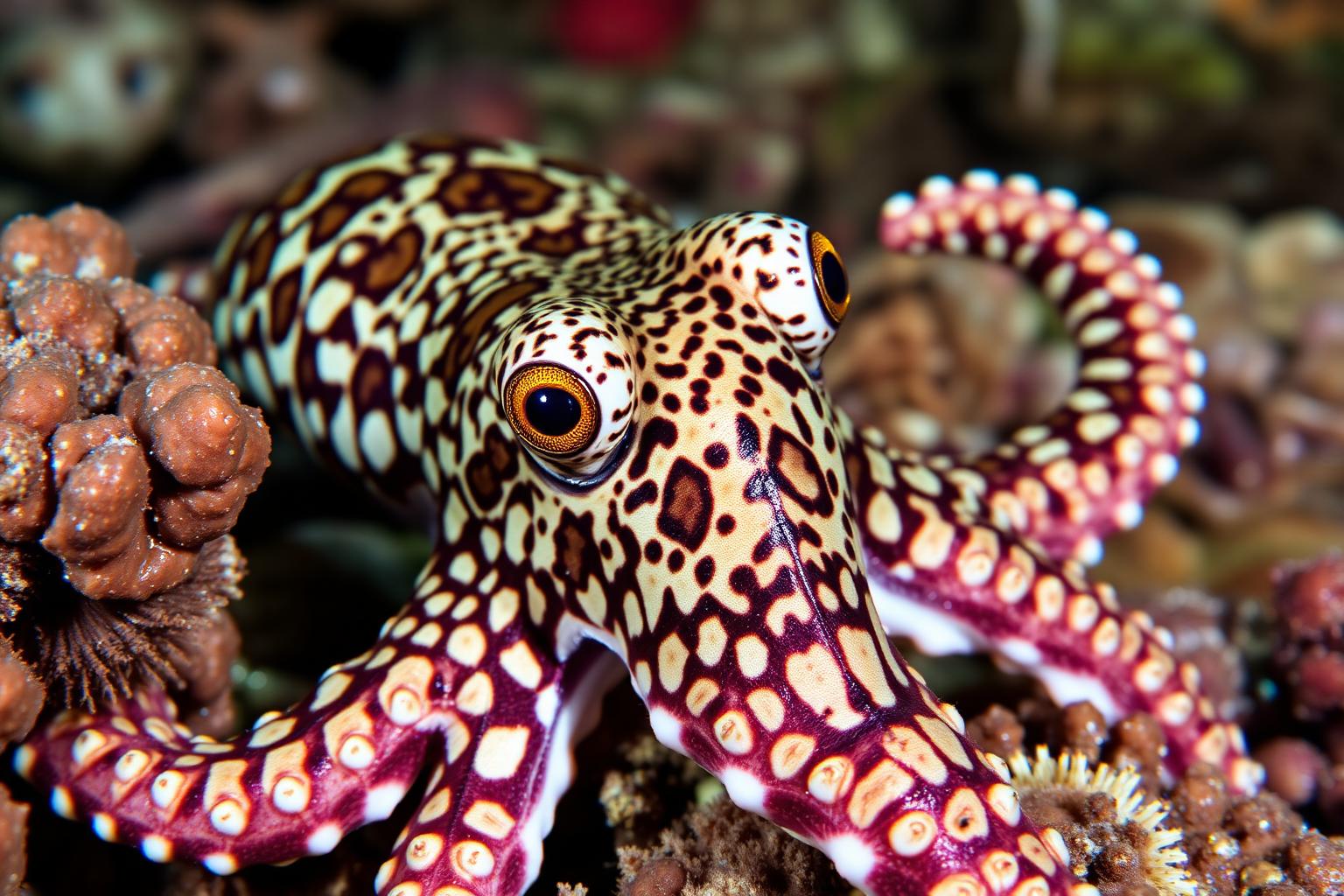
Day Octopus
A daytime hunter and master shapeshifter, Hawaiʻi's most commonly seen octopus can change color and texture in under a second.
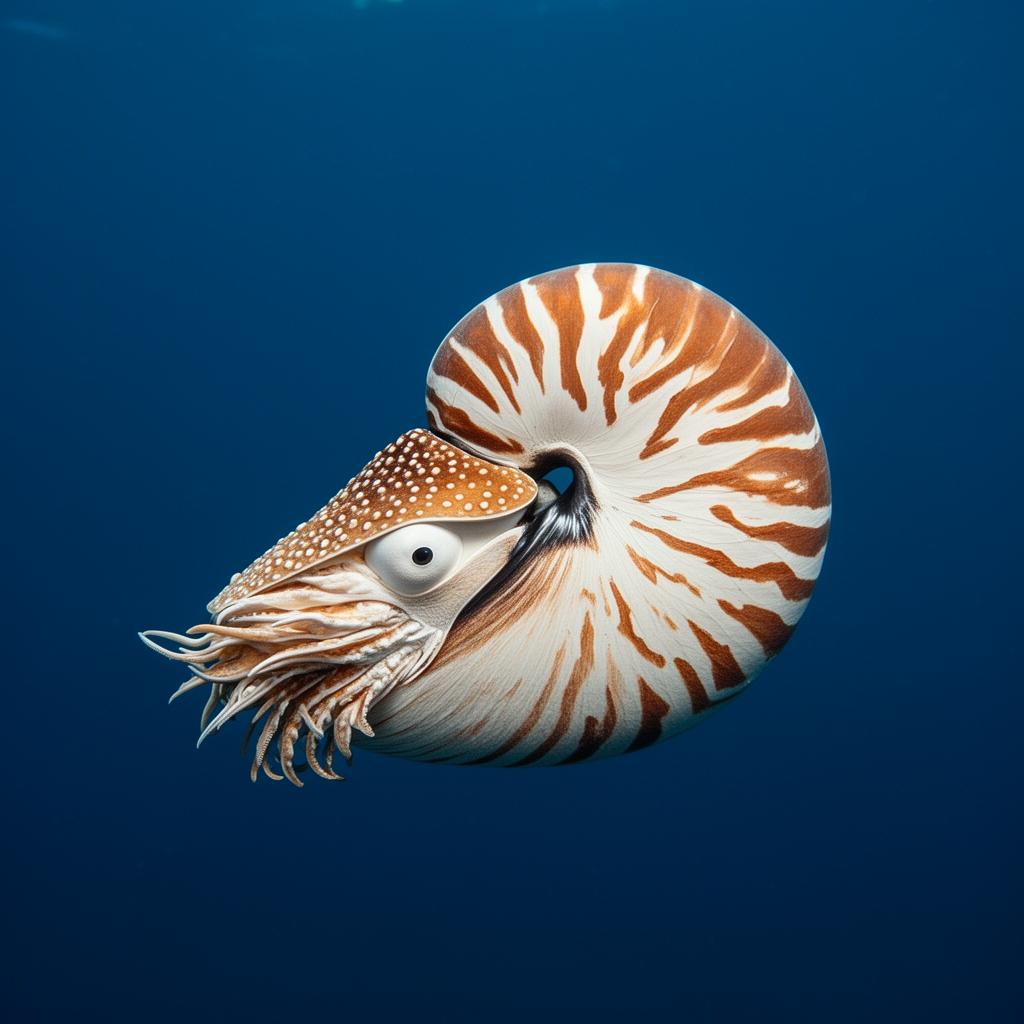
Chambered Nautilus
A living fossil whose ancestors swam alongside dinosaurs, the nautilus drifts through deep reefs in a perfect spiral shell.
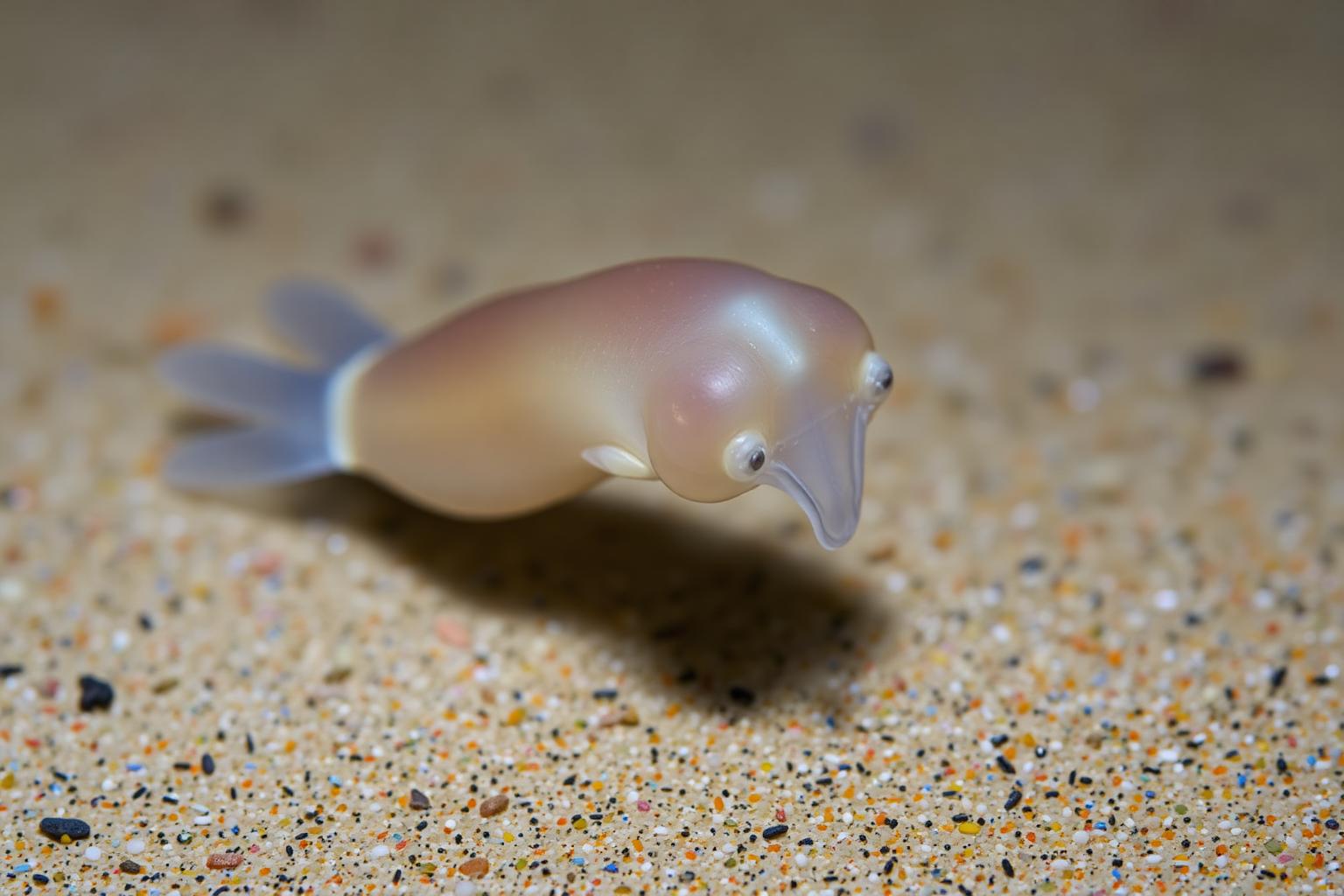
Hawaiian Bobtail Squid
A thumb-sized squid that hides in plain sight using bioluminescent bacteria to erase its own shadow under the moon.
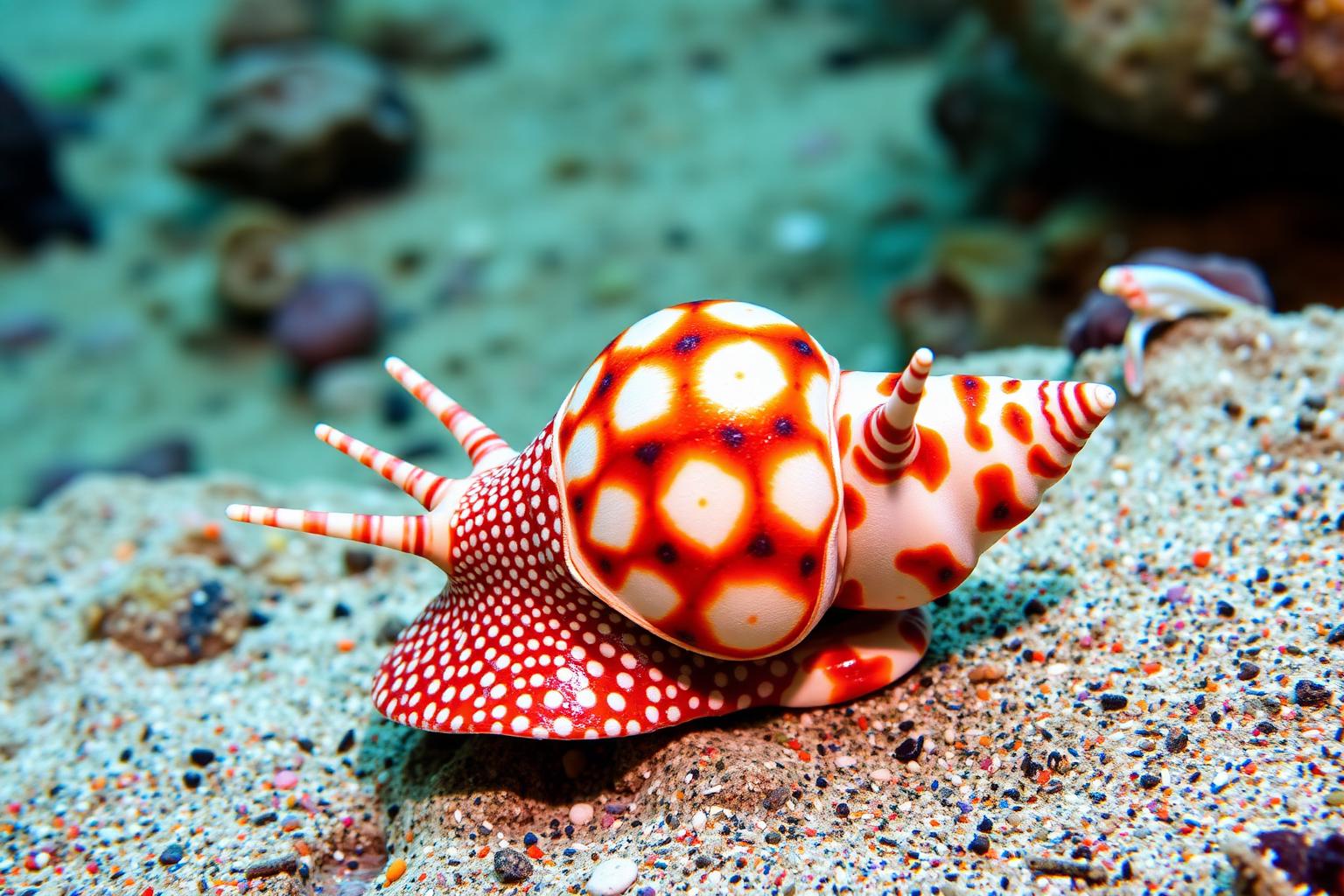
Textile Cone Snail
A beautiful but dangerous predator that fires a venomous harpoon to paralyze fish — and whose toxins inspire modern medicine.