
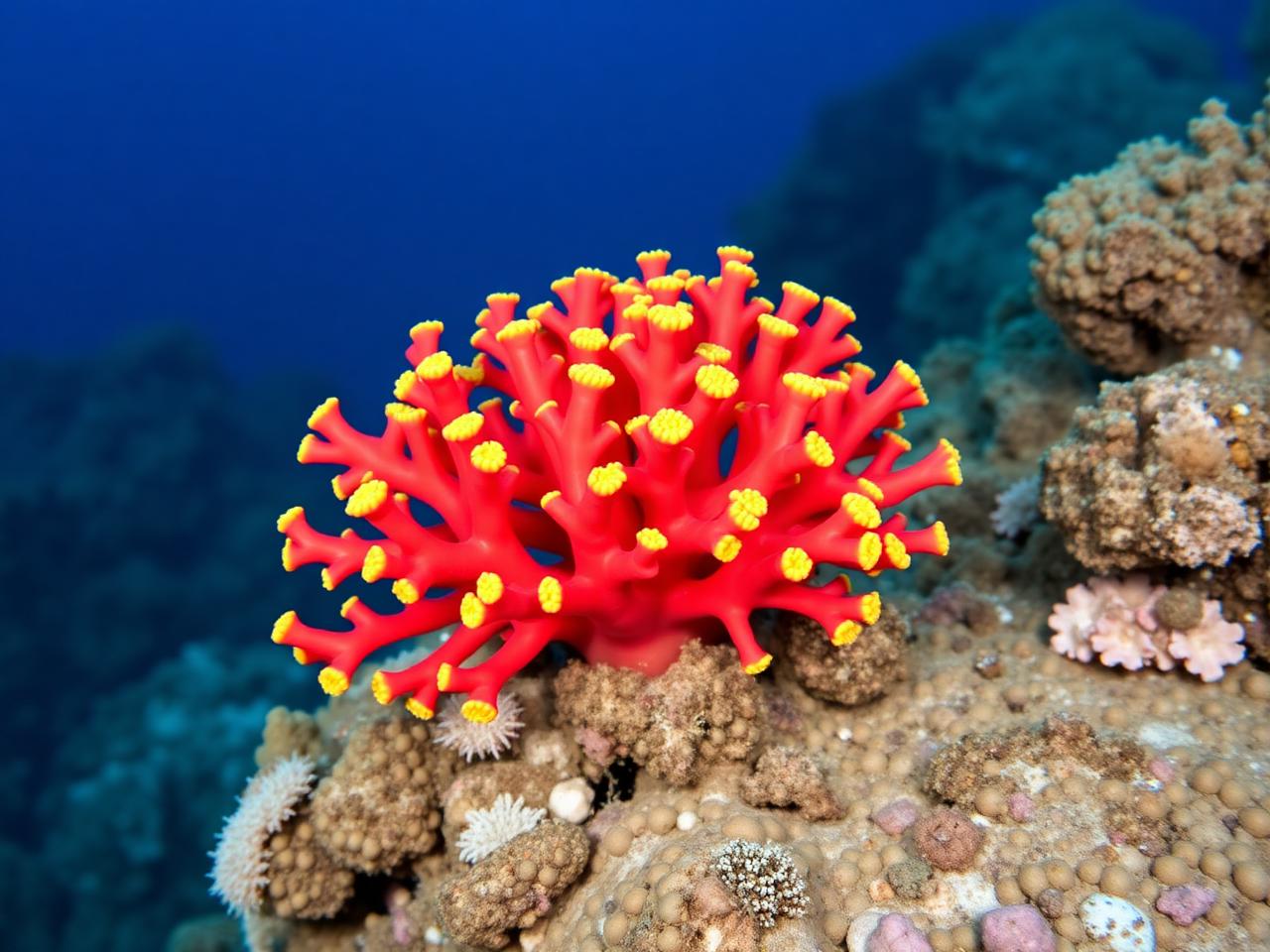
Fire Coral.
Not a true coral, but a stinging hydroid that delivers a fiery burn to anyone who brushes against it on the reef.
Fire coral looks like a hard coral — branching, plate-like, mustard-yellow with white tips — but it isn't a coral at all. It's a hydrozoan, more closely related to jellyfish and Portuguese man-o-war than to the corals it grows beside. Its polyps are too small to see, but each one is loaded with potent stinging cells.
A brush against fire coral feels like an instant burn followed by an itchy, blistering rash that can last for days or weeks. Divers and snorkelers learn to recognize the smooth, mustard-colored surface and steer wide of it. Vinegar can help neutralize embedded stinging cells; freshwater can make them fire.
Despite its bad reputation among swimmers, fire coral is an important reef-builder. Its limestone skeleton adds structure to the reef, and its colonies provide shelter for tiny invertebrates and fish that have evolved to live among the stinging branches.
More species in this group.
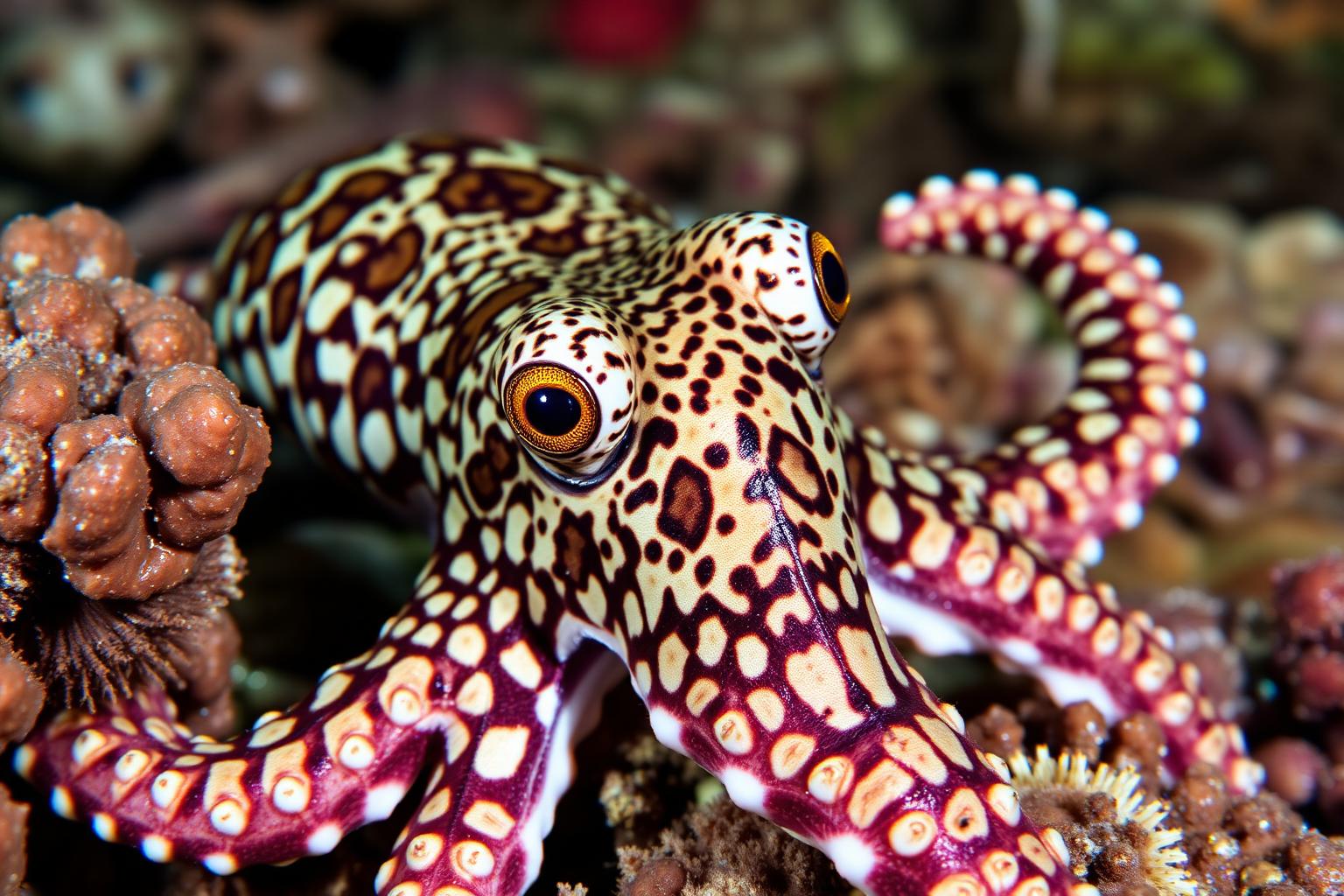
Day Octopus
A daytime hunter and master shapeshifter, Hawaiʻi's most commonly seen octopus can change color and texture in under a second.
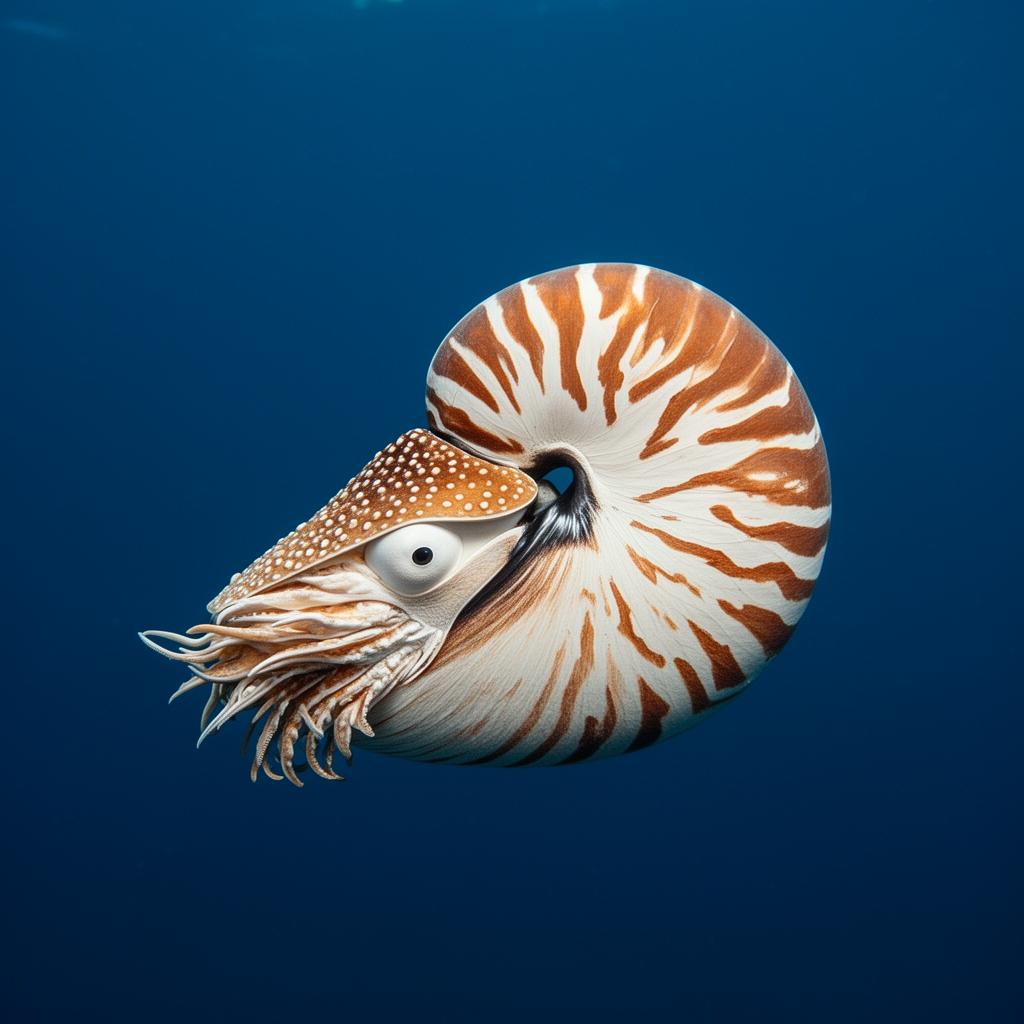
Chambered Nautilus
A living fossil whose ancestors swam alongside dinosaurs, the nautilus drifts through deep reefs in a perfect spiral shell.
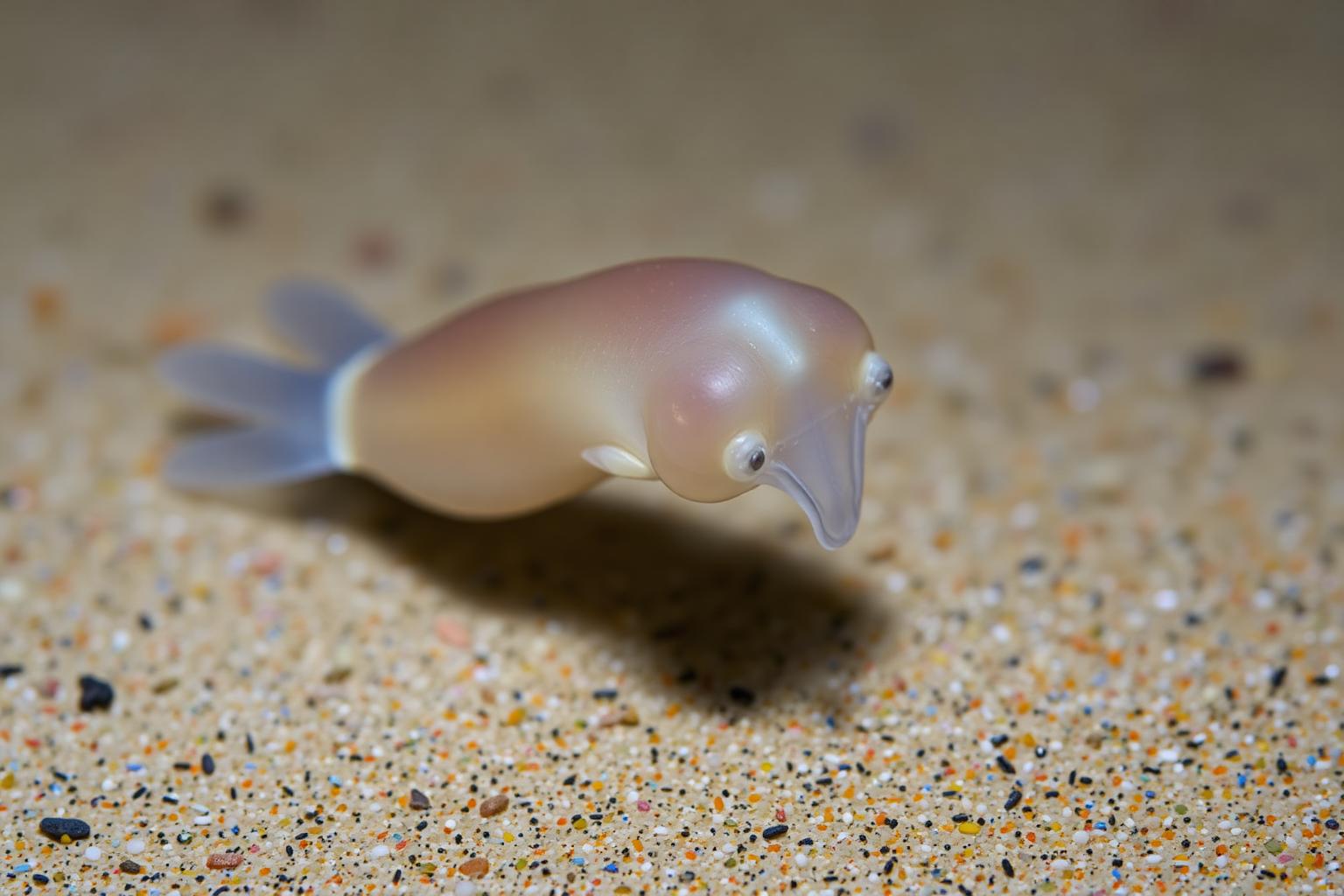
Hawaiian Bobtail Squid
A thumb-sized squid that hides in plain sight using bioluminescent bacteria to erase its own shadow under the moon.
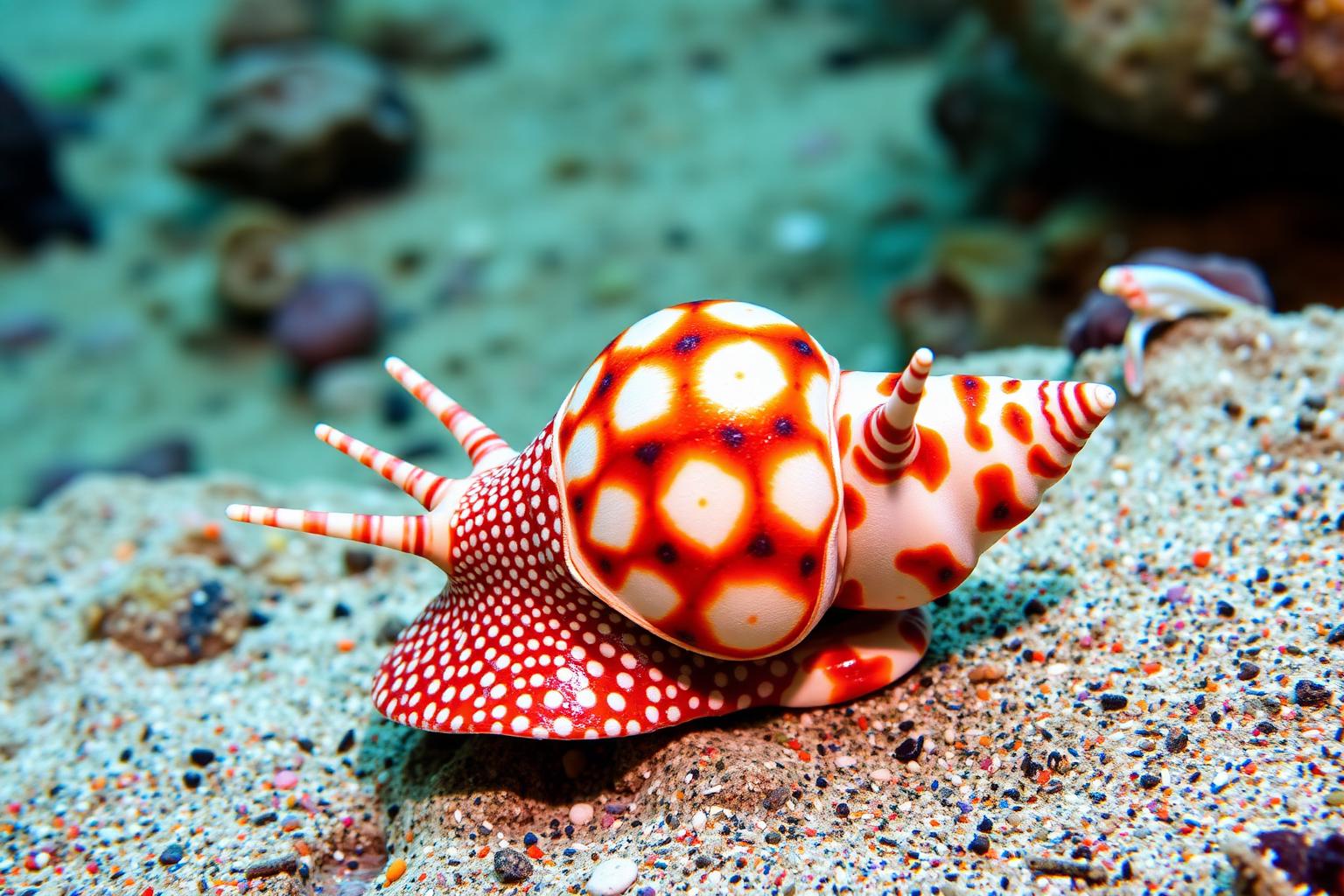
Textile Cone Snail
A beautiful but dangerous predator that fires a venomous harpoon to paralyze fish — and whose toxins inspire modern medicine.