
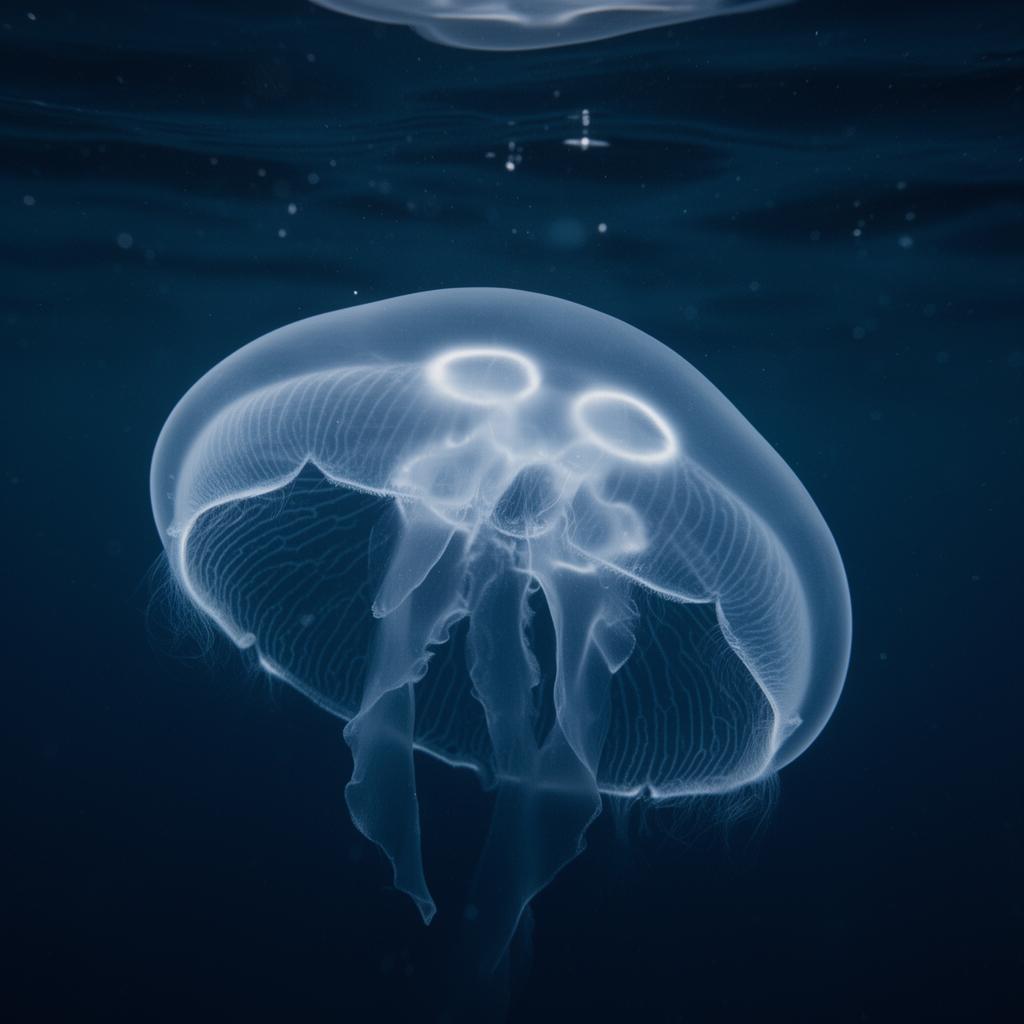
Moon Jelly.
Translucent ghosts of the open ocean — 95% water, no brain, no heart, and pulsing through the sea for over 500 million years.
Moon jellies are the iconic translucent jellyfish, instantly recognizable by the four horseshoe-shaped gonads visible through the top of the bell. They drift in coastal waters around the world, including occasional blooms in Hawaiʻi, feeding on plankton they catch with a mucus film on the underside of the bell.
Like all true jellies, moon jellies have no brain, no heart, no bones, and no blood. They are 95% water, with a simple nerve net that lets them sense light, gravity, and chemical signals. Yet they have thrived in the ocean for over 500 million years — far longer than fish, dinosaurs, or trees.
Their stings are very mild and rarely cause more than a slight tingle on human skin. Behind the gentle glow lies a fascinating life cycle: a free-swimming jelly releases larvae that settle and grow into stalk-like polyps, which then bud off stacks of tiny baby jellies like a stack of pancakes peeling apart.
More species in this group.
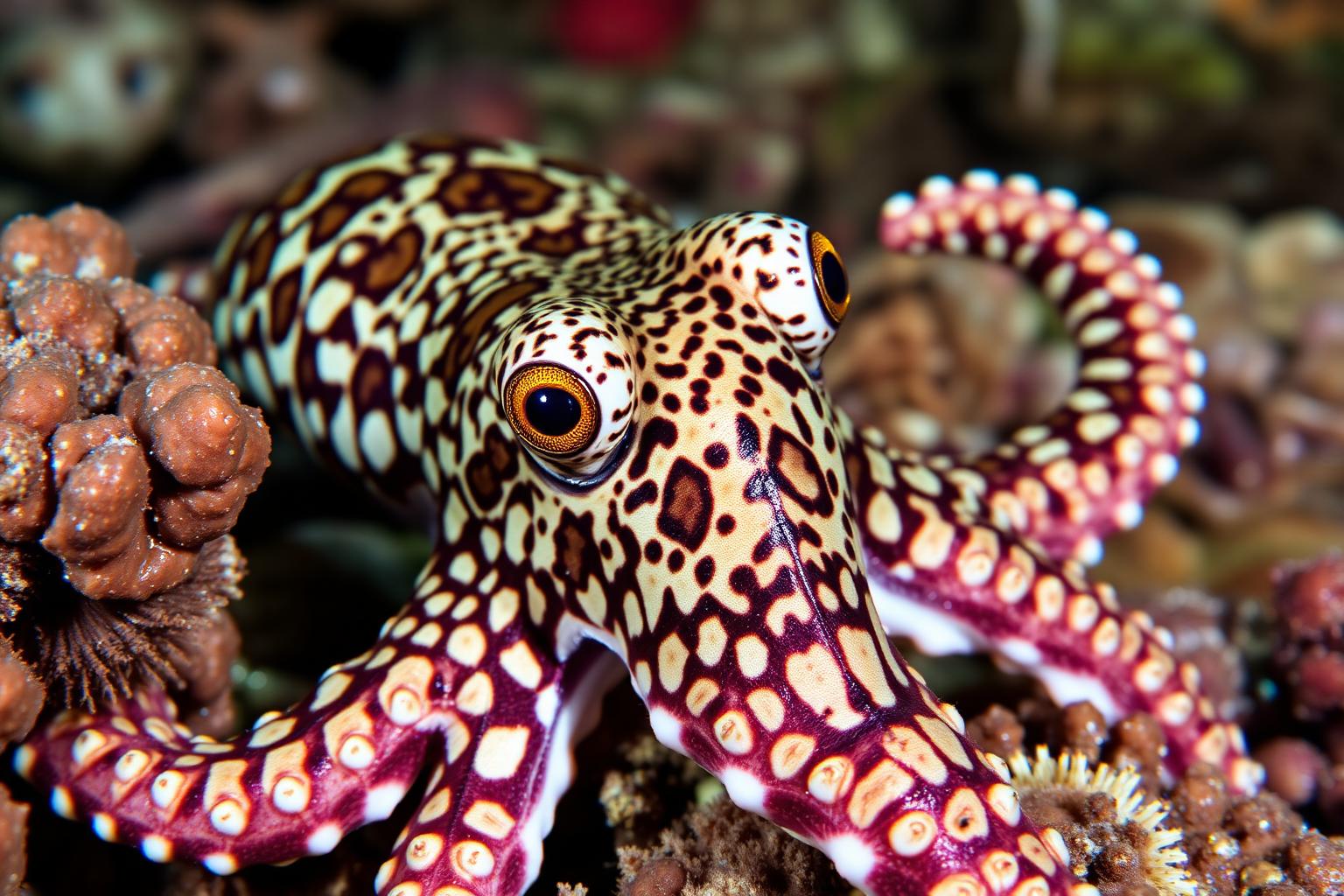
Day Octopus
A daytime hunter and master shapeshifter, Hawaiʻi's most commonly seen octopus can change color and texture in under a second.
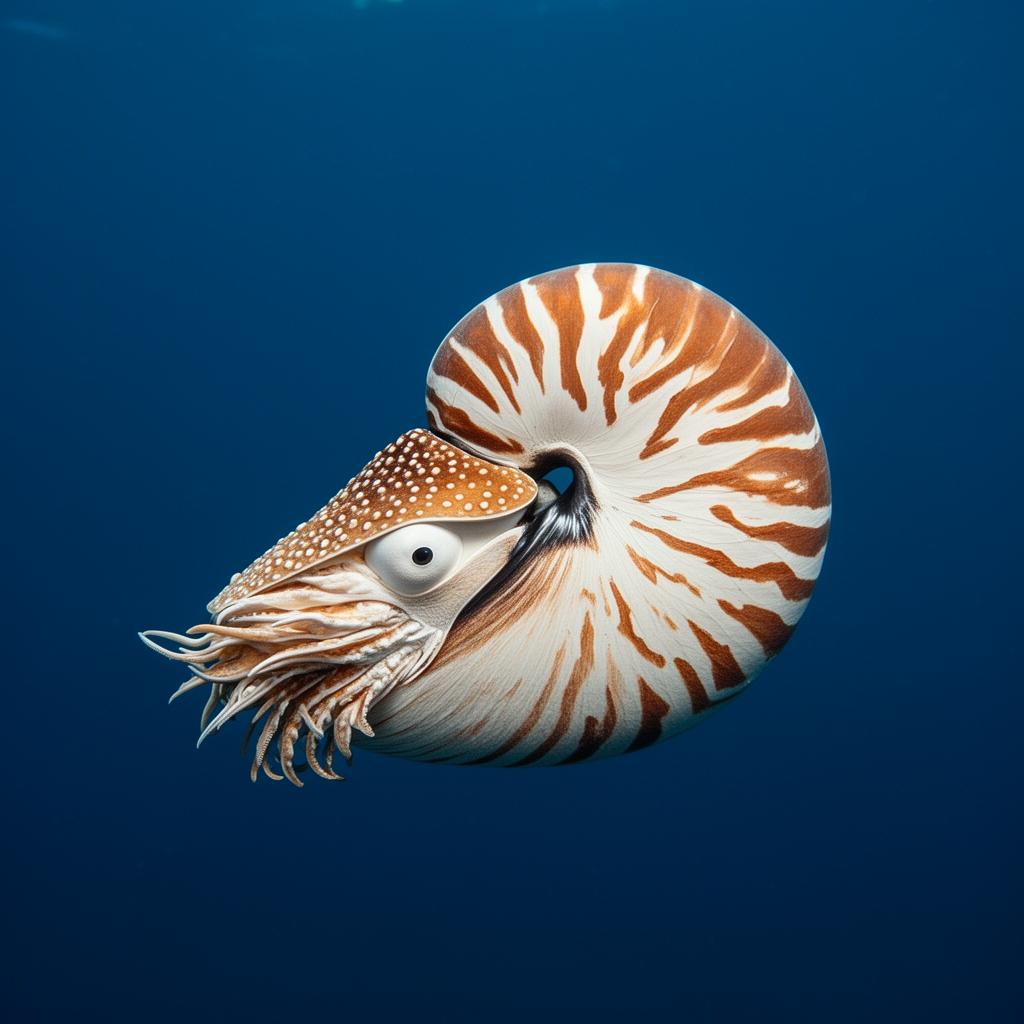
Chambered Nautilus
A living fossil whose ancestors swam alongside dinosaurs, the nautilus drifts through deep reefs in a perfect spiral shell.
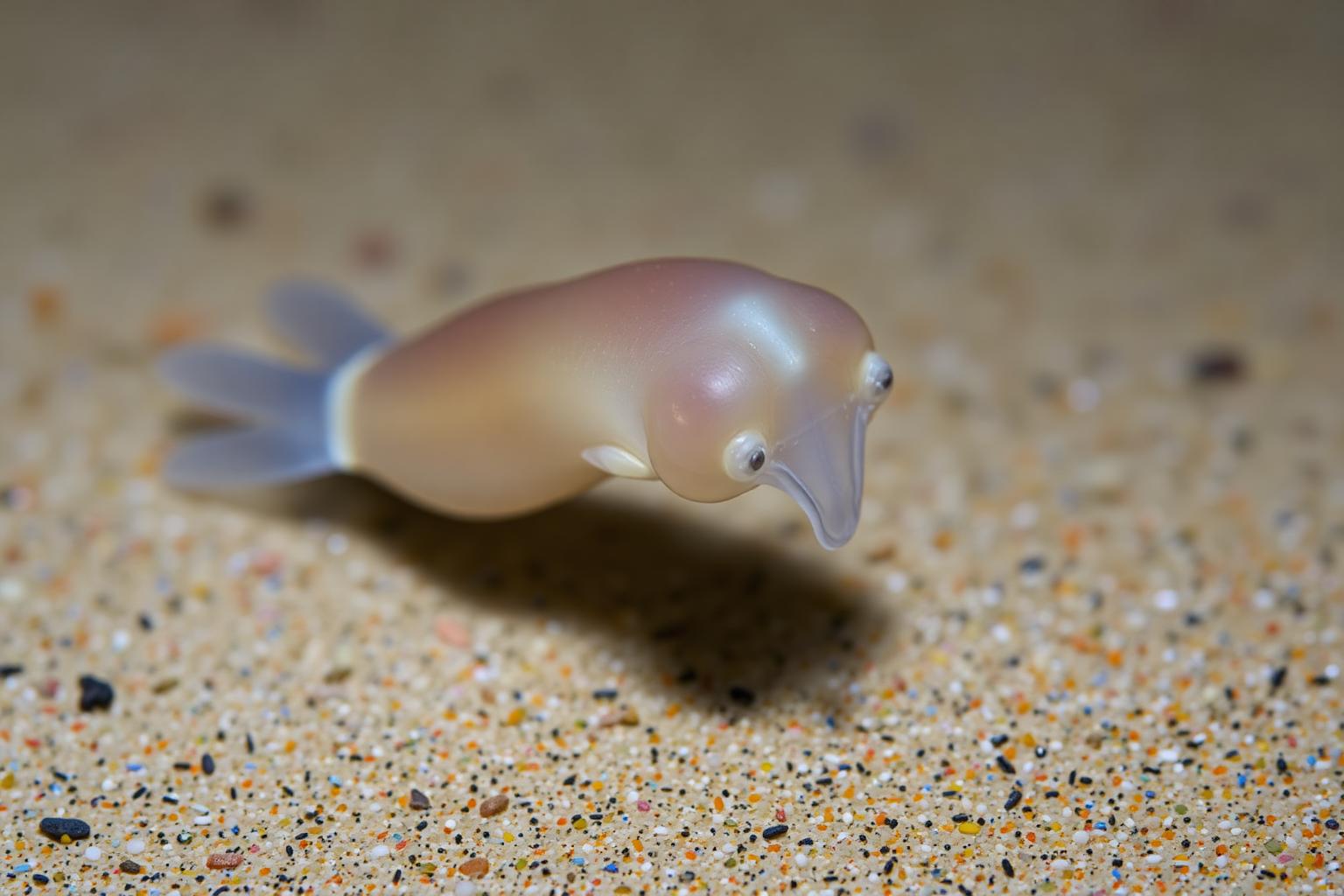
Hawaiian Bobtail Squid
A thumb-sized squid that hides in plain sight using bioluminescent bacteria to erase its own shadow under the moon.
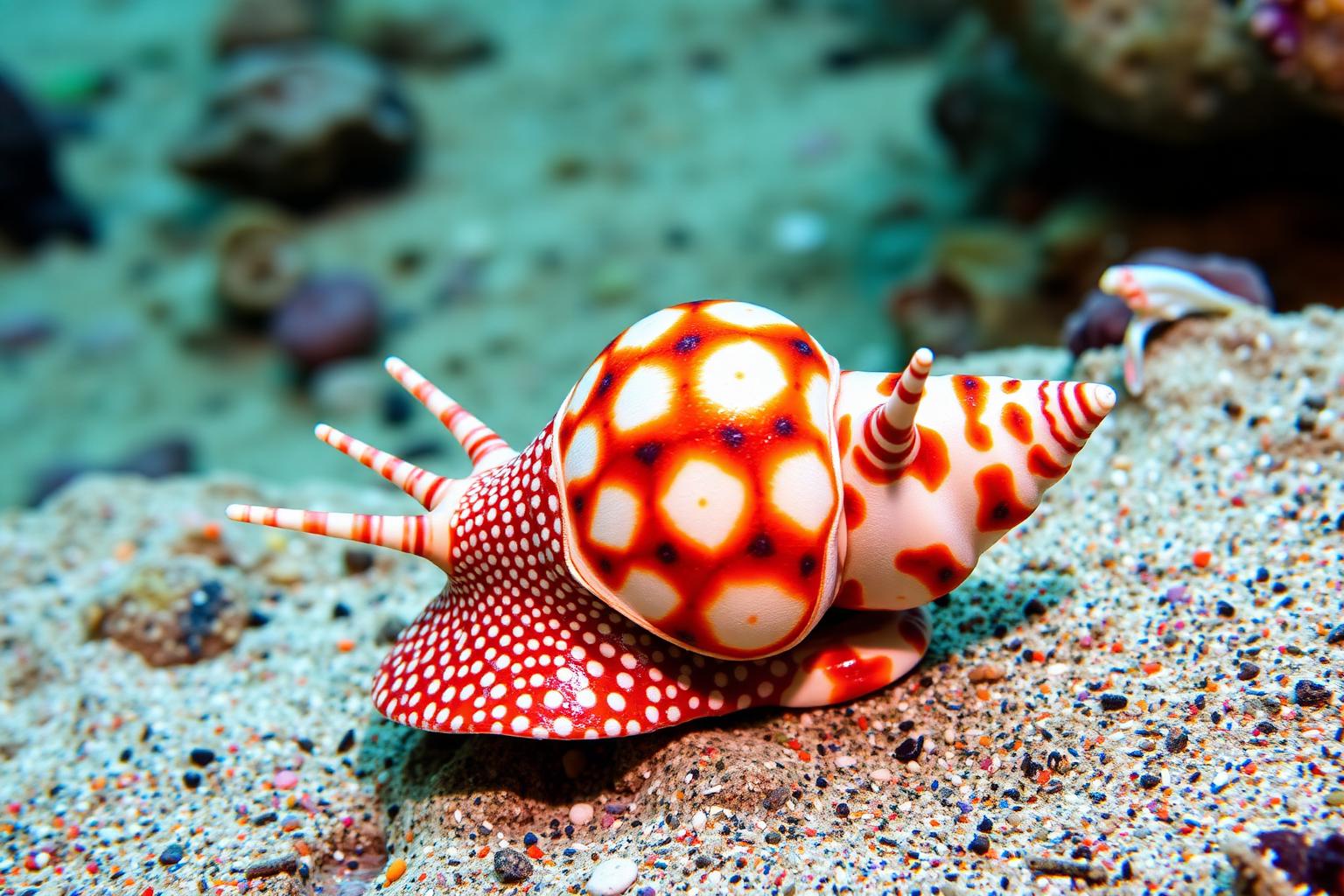
Textile Cone Snail
A beautiful but dangerous predator that fires a venomous harpoon to paralyze fish — and whose toxins inspire modern medicine.